> For the complete documentation index, see [llms.txt](https://docs.easy-dataset.com/llms.txt). Markdown versions of documentation pages are available by appending `.md` to page URLs; this page is available as [Markdown](https://docs.easy-dataset.com/ed/en/basic/publish-your-docs/domain-tags.md).
# Domain Tags
{% hint style="info" %}
After text chunking is completed, the platform will call a large model to automatically establish a domain tag tree based on the literature data.
{% endhint %}
### View Original Directory
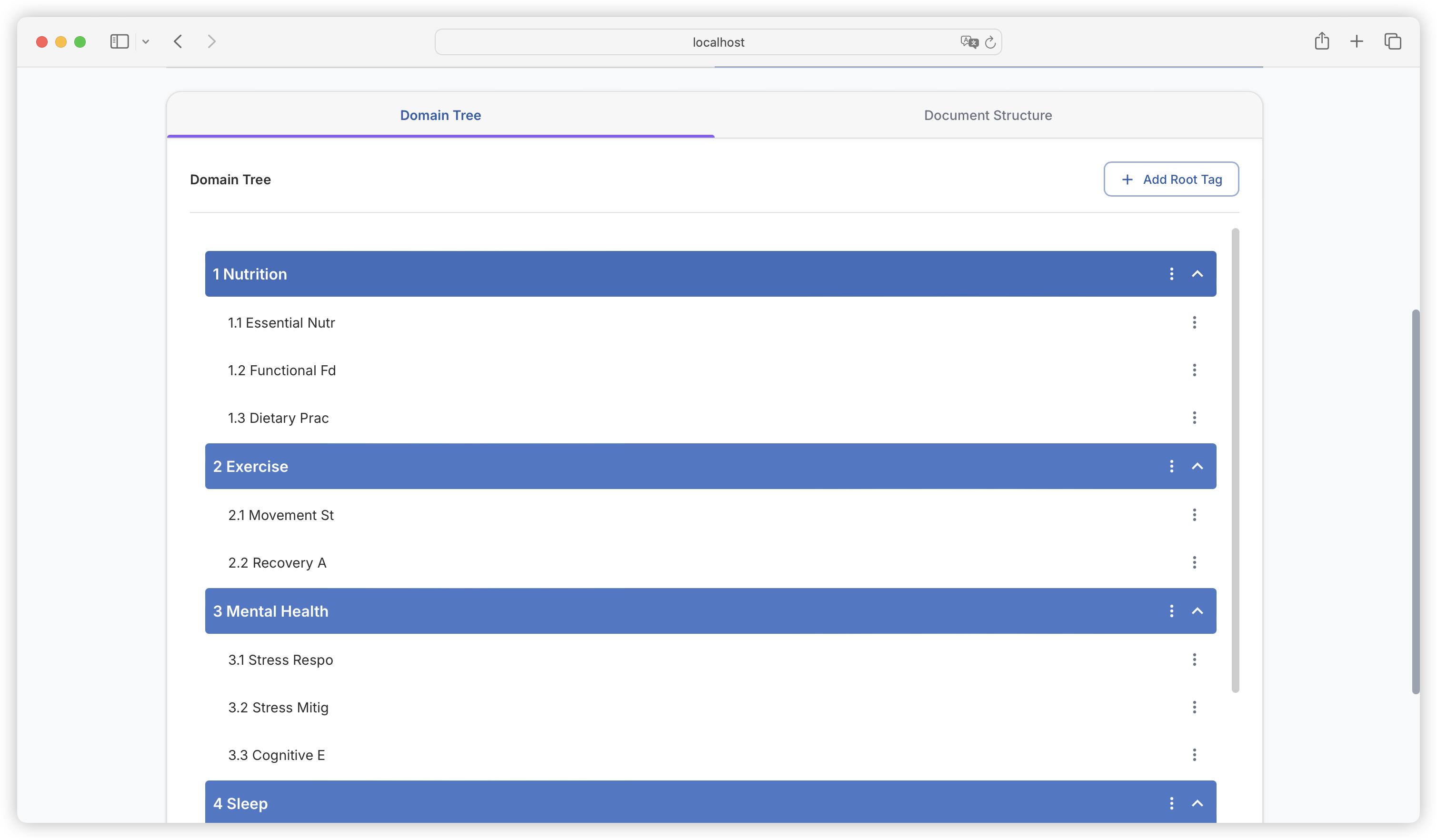
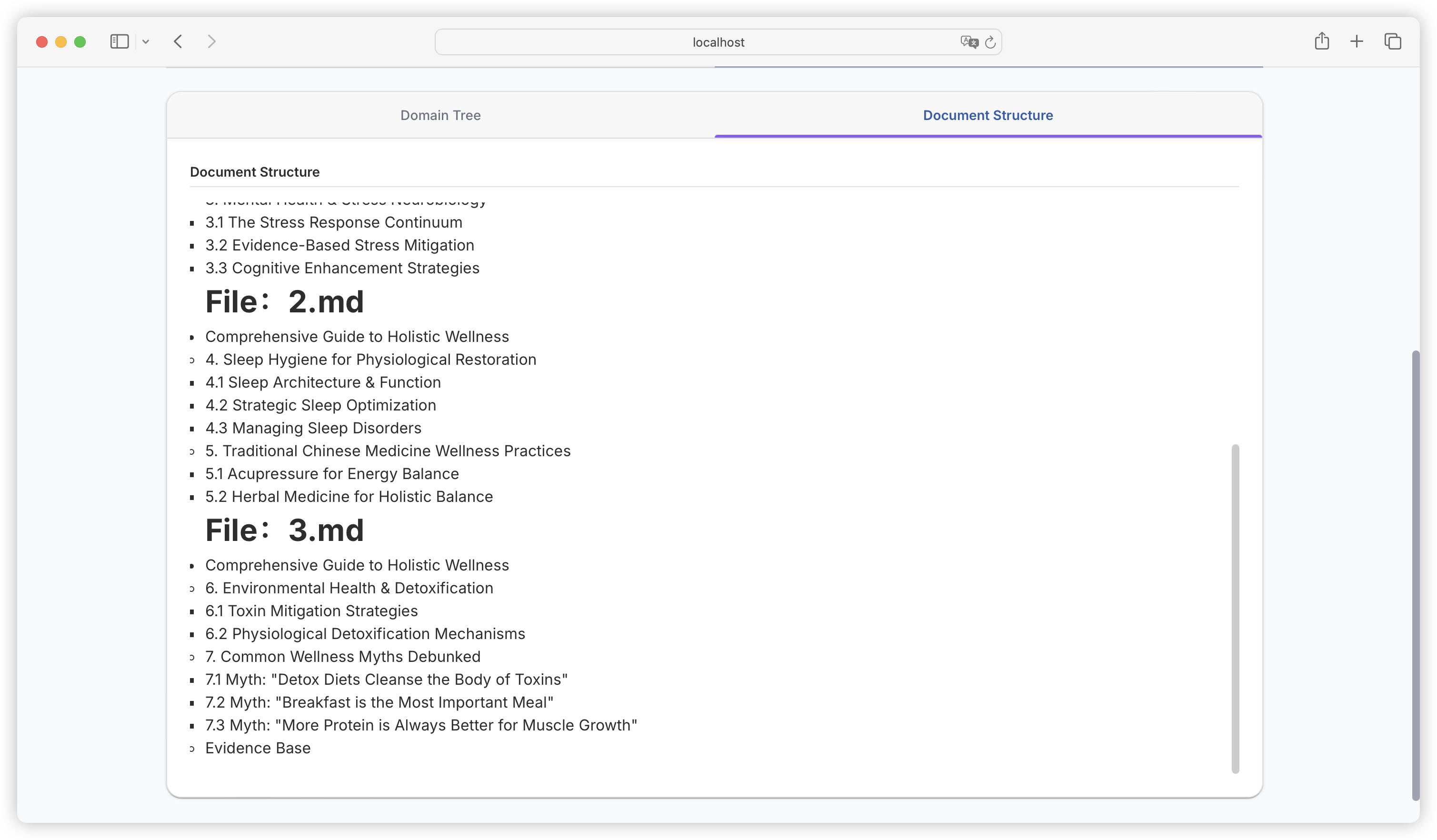
Switch to the Domain Tree tab, and you can see the domain tree intelligently analyzed by AI based on the literature, as well as the original directory extracted from the literature:
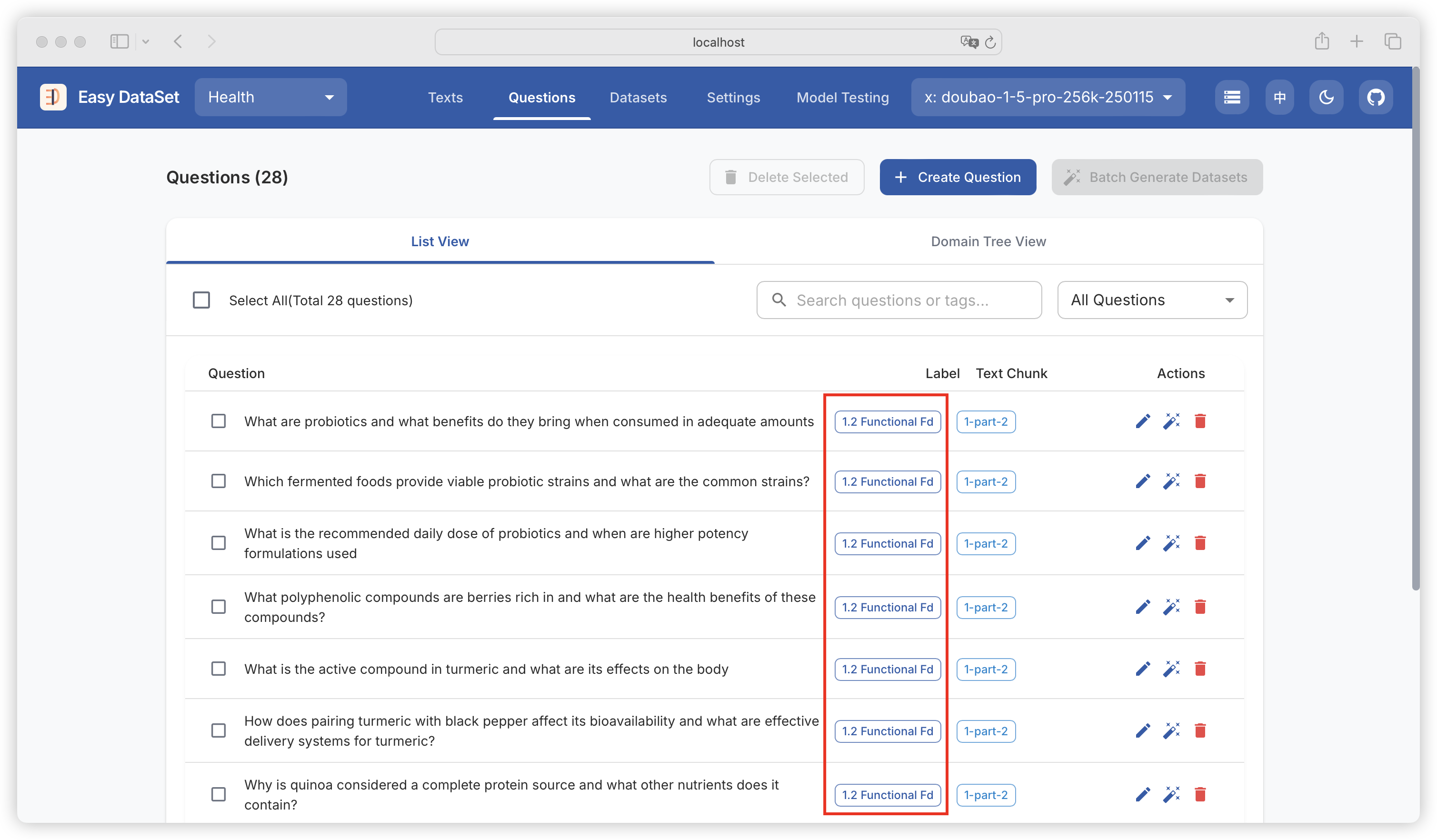
In subsequent tasks of generating questions and datasets, the platform will build based on this domain tree, and map the generated questions and datasets to each domain tag. The domain tree allows each dataset to have global understanding capabilities and reduces the possibility of generating duplicate datasets.
### Edit Domain Tree
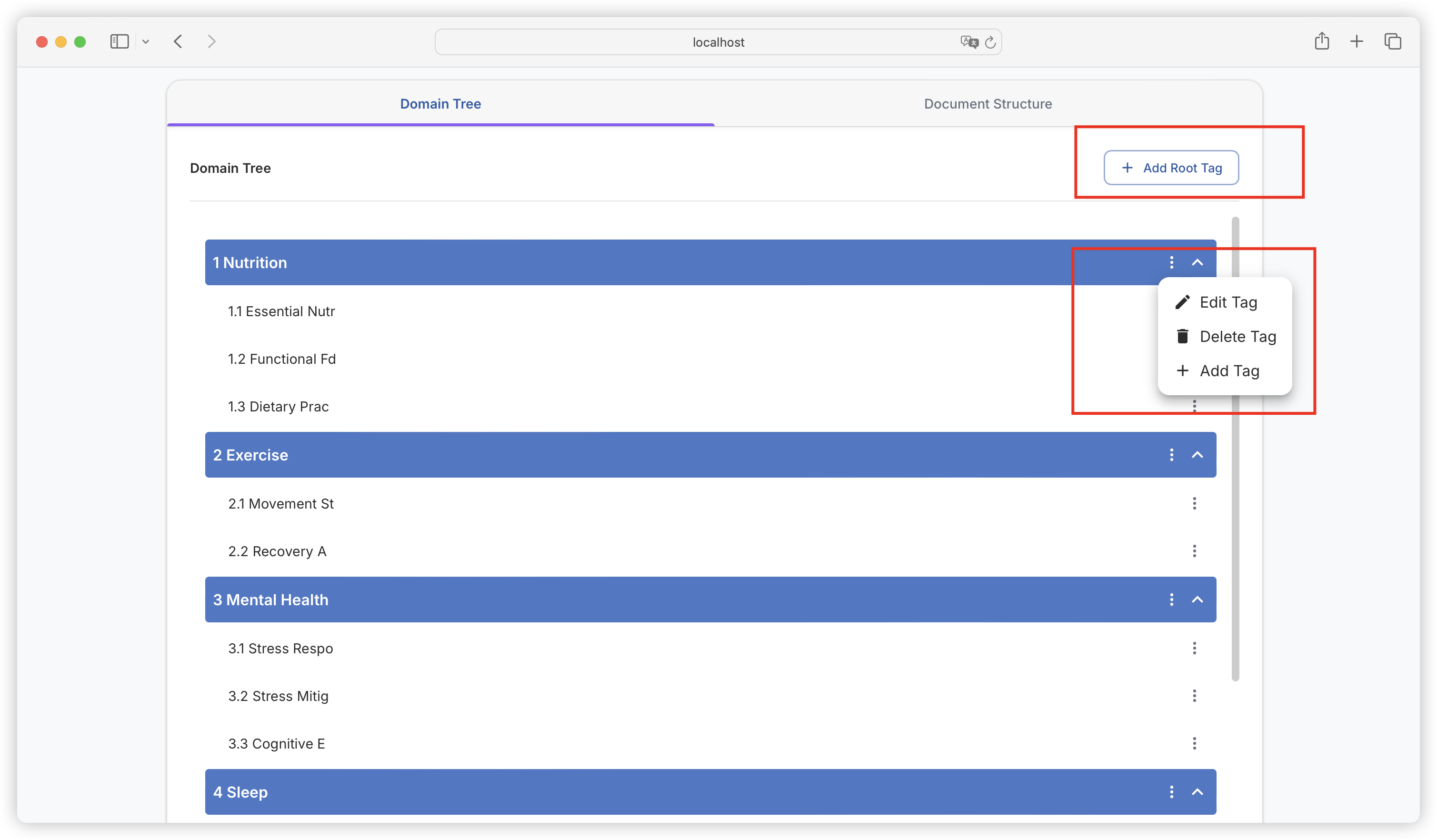
If you feel that there are inaccuracies or imperfections in the AI-generated domain tree, you can also directly manually add, modify, or delete tags. It is recommended to confirm the domain tree division more accurately before generating questions.
---
# Agent Instructions
This documentation is published with GitBook. GitBook is the documentation platform designed so that both humans and AI agents can read, navigate, and reason over technical content effectively. Learn more at gitbook.com.
## Querying This Documentation
If you need additional information that is not directly available in this page, you can query the documentation dynamically by asking a question.
Perform an HTTP GET request on the current page URL with the `ask` query parameter, and the optional `goal` query parameter:
```
GET https://docs.easy-dataset.com/ed/en/basic/publish-your-docs/domain-tags.md?ask=&goal=
```
`ask` is the immediate question: it should be specific, self-contained, and written in natural language.
`goal` is optional and describes the broader end goal you are ultimately trying to accomplish on behalf of the user. GitBook uses it to tailor the answer towards what is most useful for that goal.
The response will contain a direct answer to the question and relevant excerpts and sources from the documentation.
Use this mechanism when the answer is not explicitly present in the current page, you need clarification or additional context, or you want to retrieve related documentation sections.