> For the complete documentation index, see [llms.txt](https://docs.easy-dataset.com/llms.txt). Markdown versions of documentation pages are available by appending `.md` to page URLs; this page is available as [Markdown](https://docs.easy-dataset.com/bo-ke/shi-zhan-an-li/an-li-1-sheng-cheng-qi-che-tu-pian-shi-bie-shu-ju-ji.md).
# 案例1:生成汽车图片识别数据集
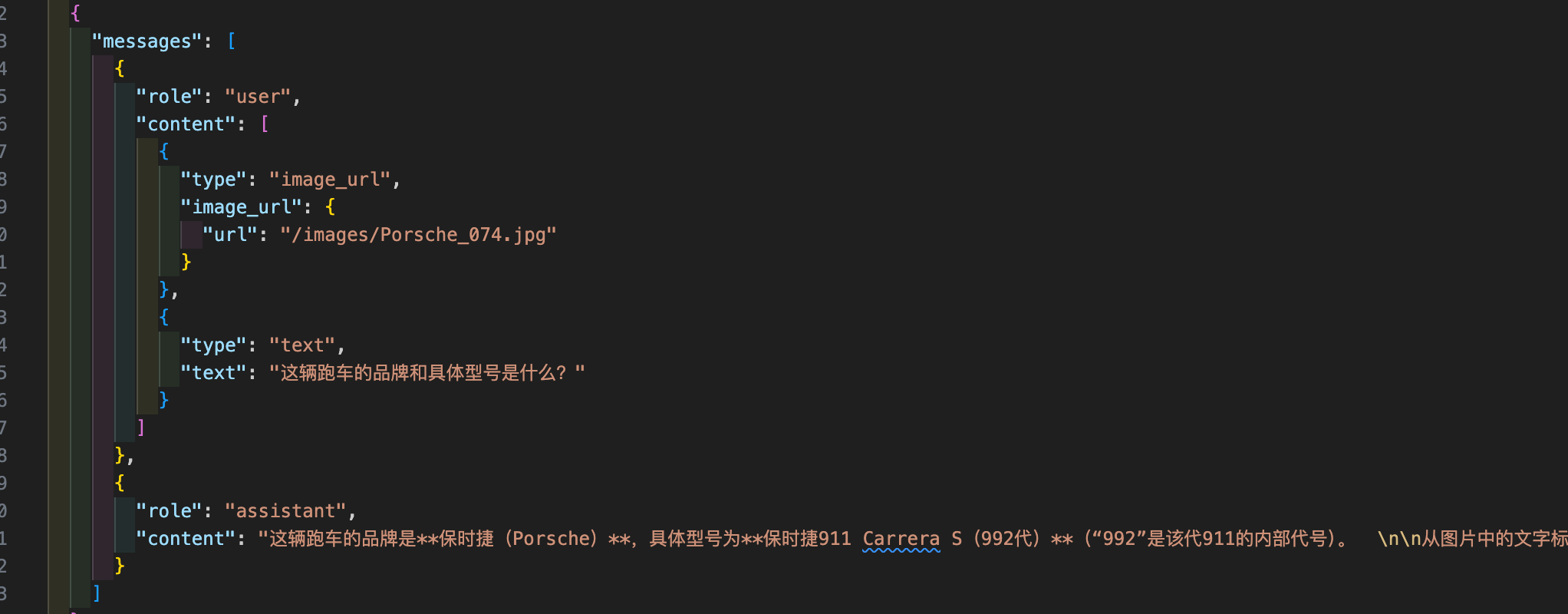
`VQA` 数据集(Visual Question Answering Dataset)是用于多模态模型训练 / 微调的核心数据集合,核心包含 “图像 + 对应自然语言问题 + 标准答案” 三部分,目的是让模型学会结合图像视觉信息与语言理解能力,准确回答关于图像内容的问题。
例如下面就是一个最简单的 `VQA` 数据集案例:
> 目标场景:已有一批各种汽车的图片,希望创建一组针对汽车特征进行识别的数据集,用于训练车辆识别模型。
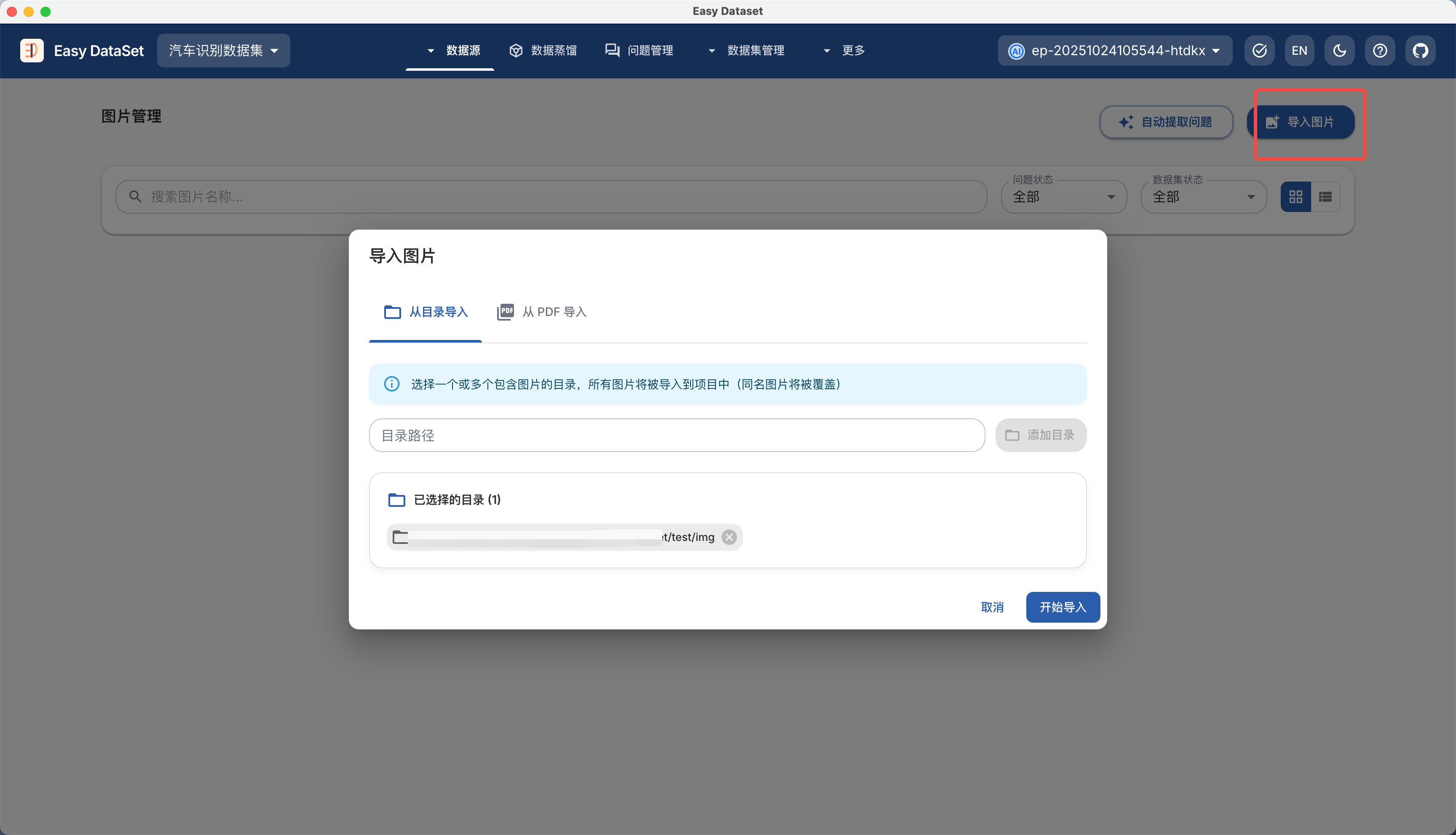
首先进入【数据源 - 图片管理】模块,点击右上角导入图片,这里我们将需要生成数据集的图片目录输入进去(本机的绝对路径):
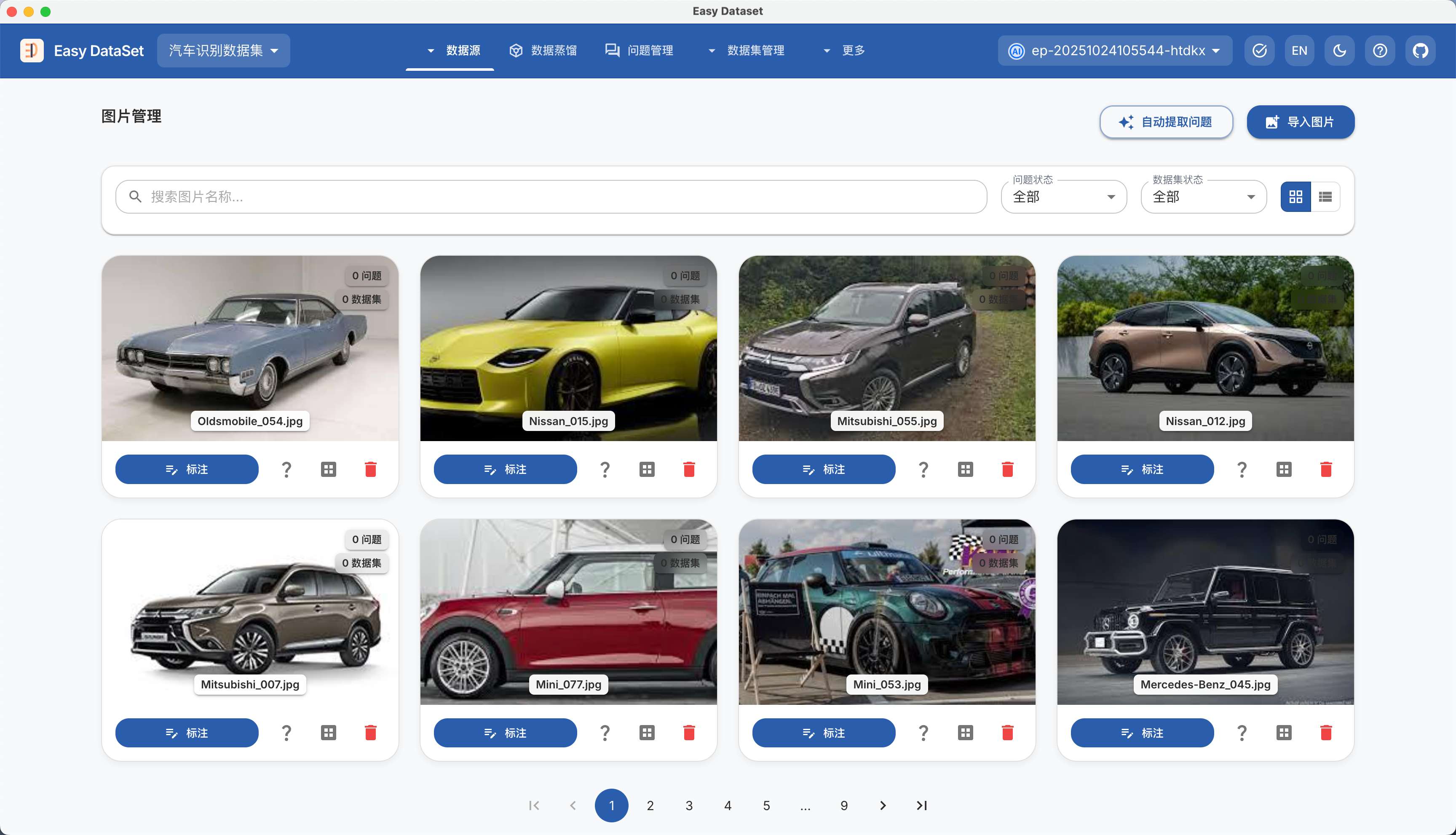
导入完成后,图片会加载到当前项目目录下,然后我们将看到所有图片:
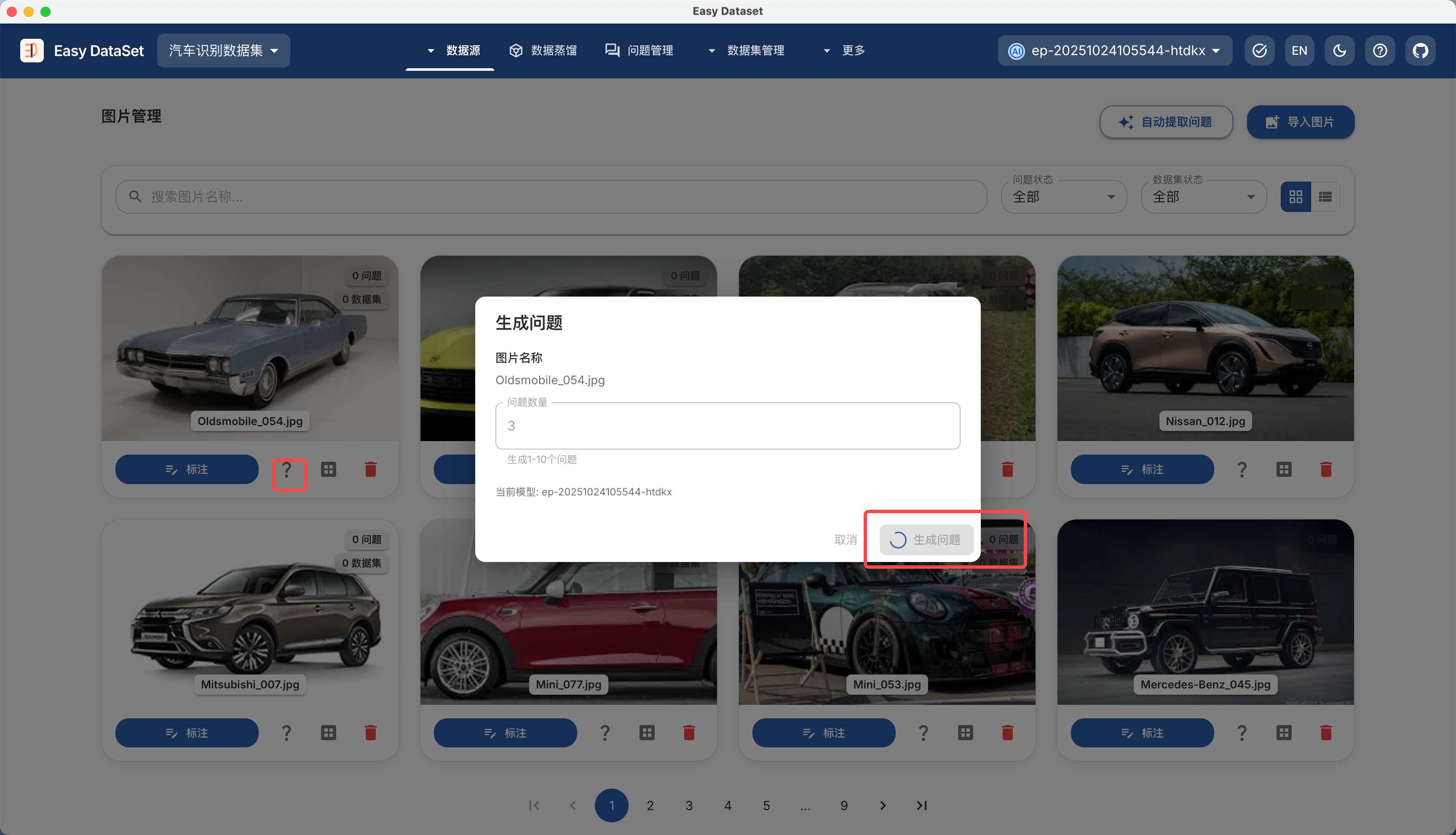
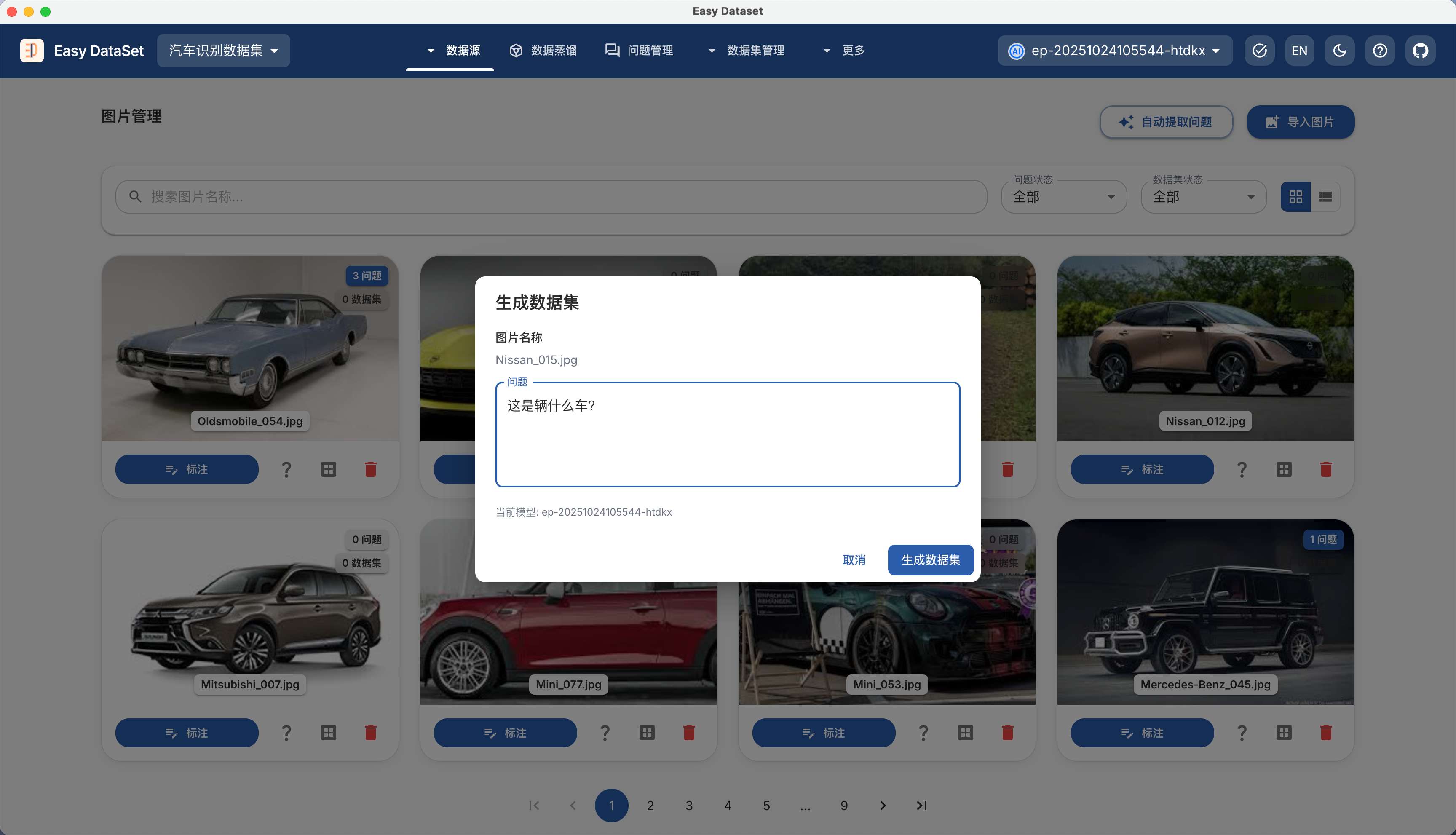
我们可以点击单个图片的生成问题,让 AI 智能根据图片识别问题:
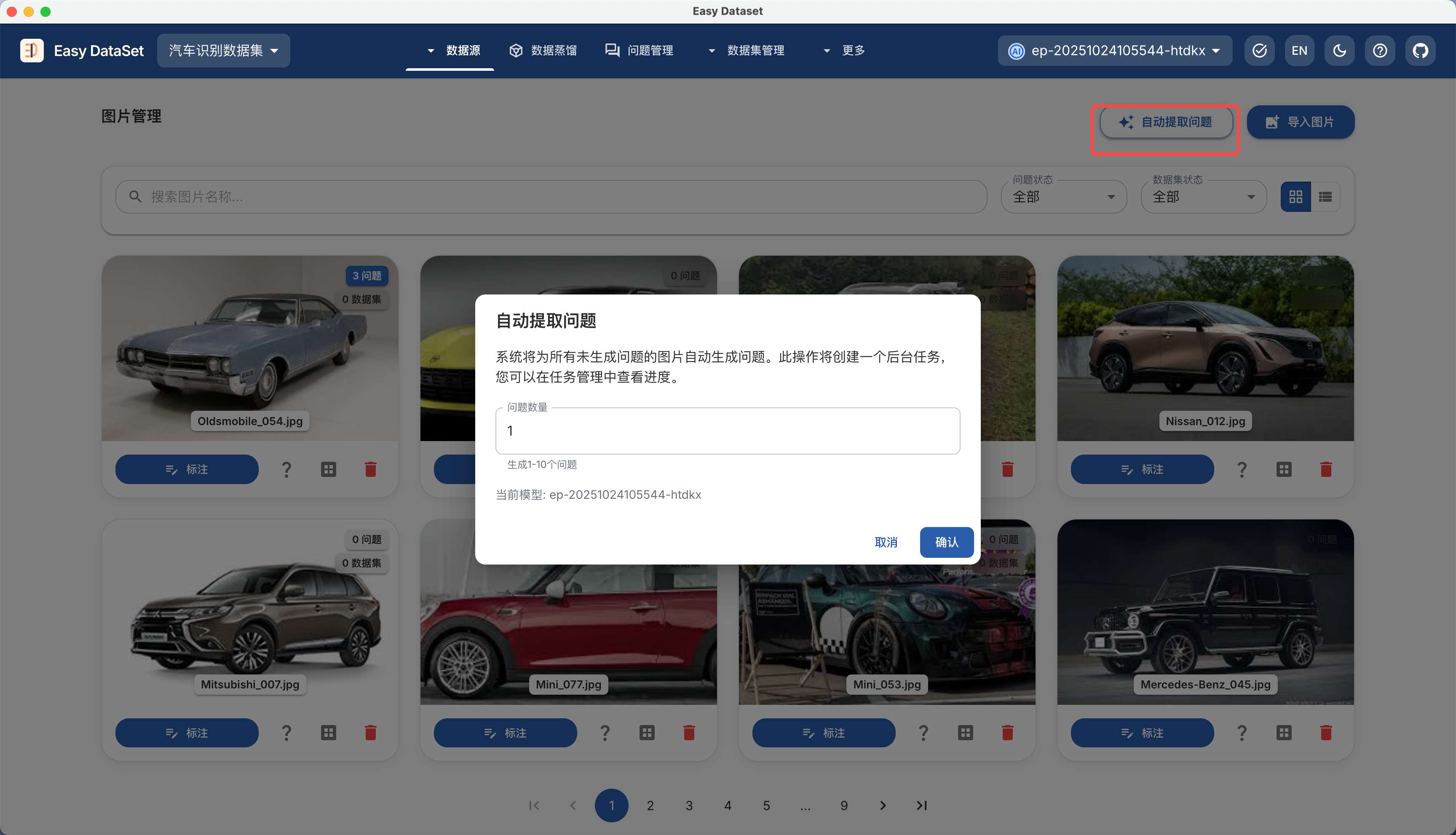
也可以点击右上角的自动提取问题,这将创建一个后台批量任务,自动为没有生成问题的图片来生成问题:
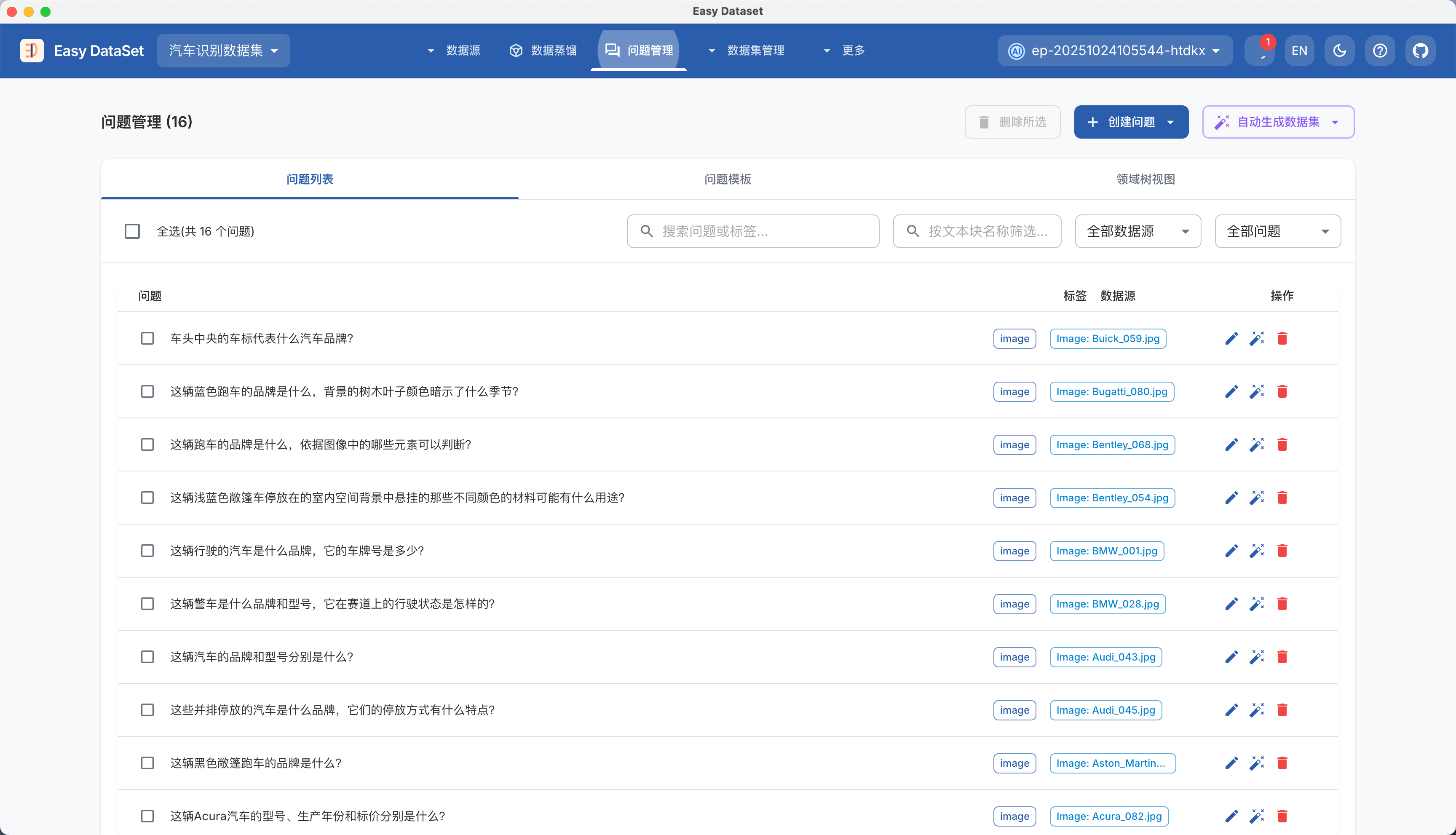
进入问题管理模块可以看到所有已经生成的问题,和普通问题的区别是数据源属性,普通问题关联的是文本块,而图片问题关联的是一张具体的图片:
回到图片管理模块,我们可以直接针对某张图片进行提问,让 AI 直接生成答案:
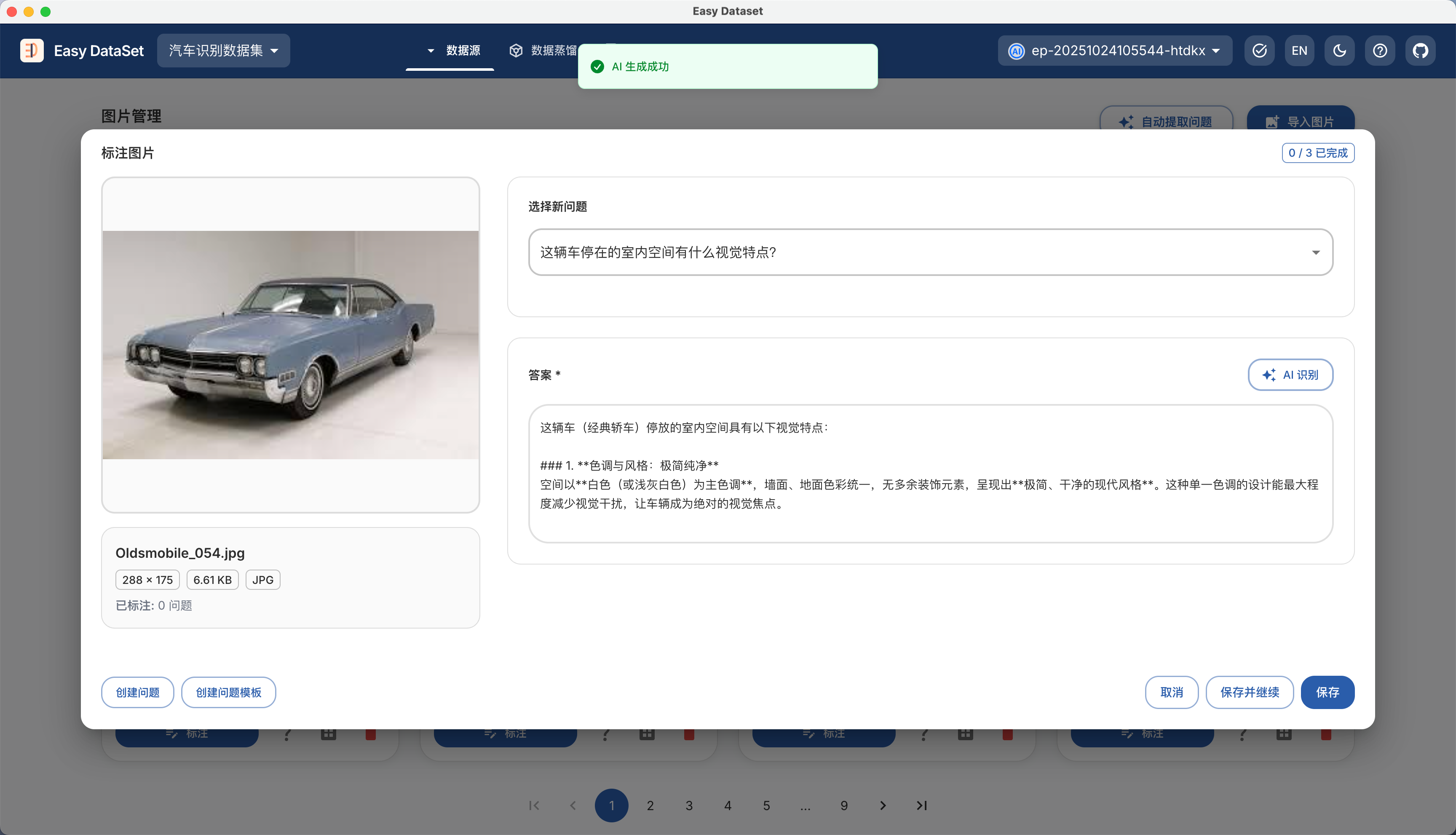
也可以点开智能标注模块,手动标注或让 AI 辅助生成已经创建好的问题对应答案:
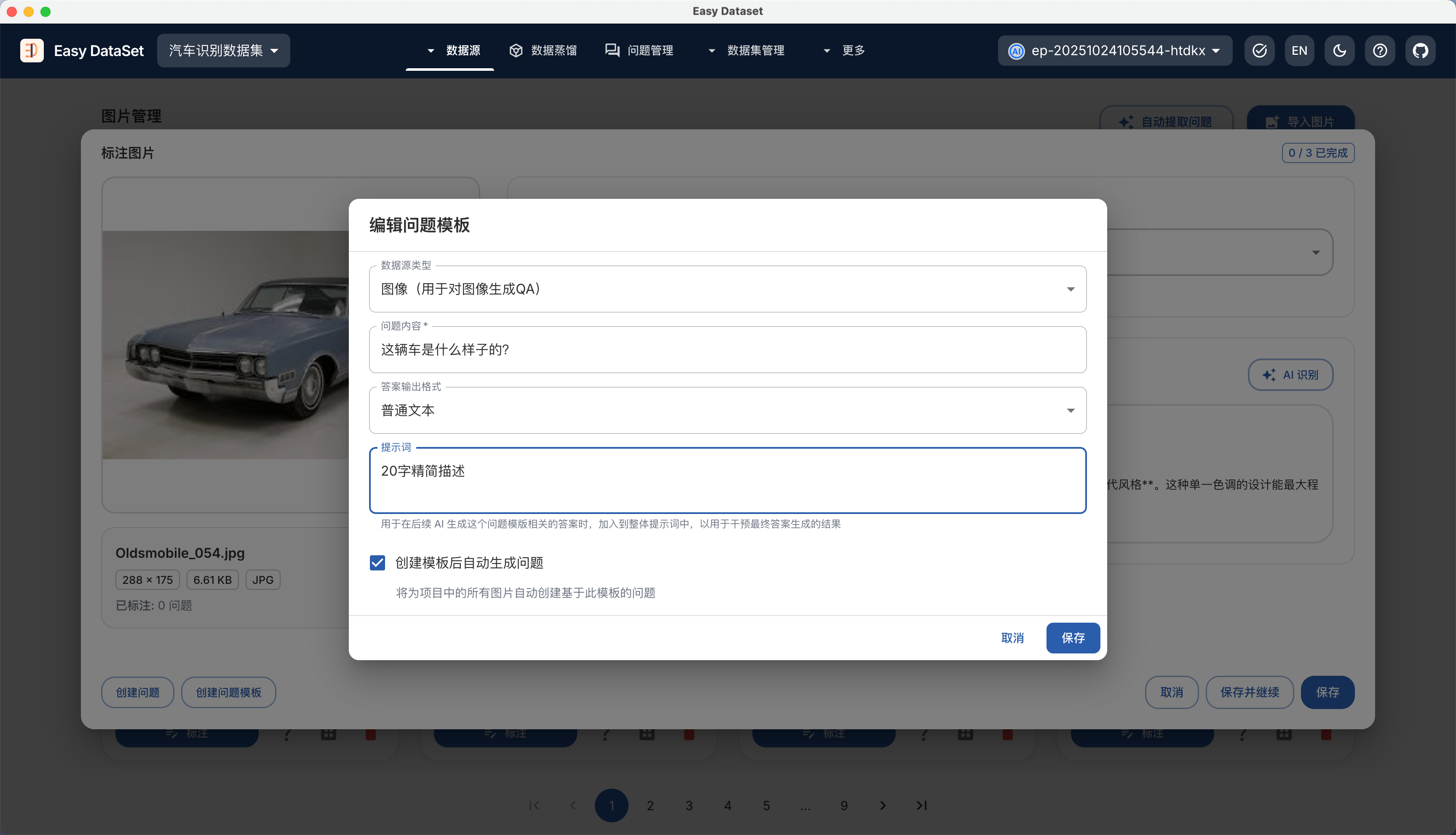
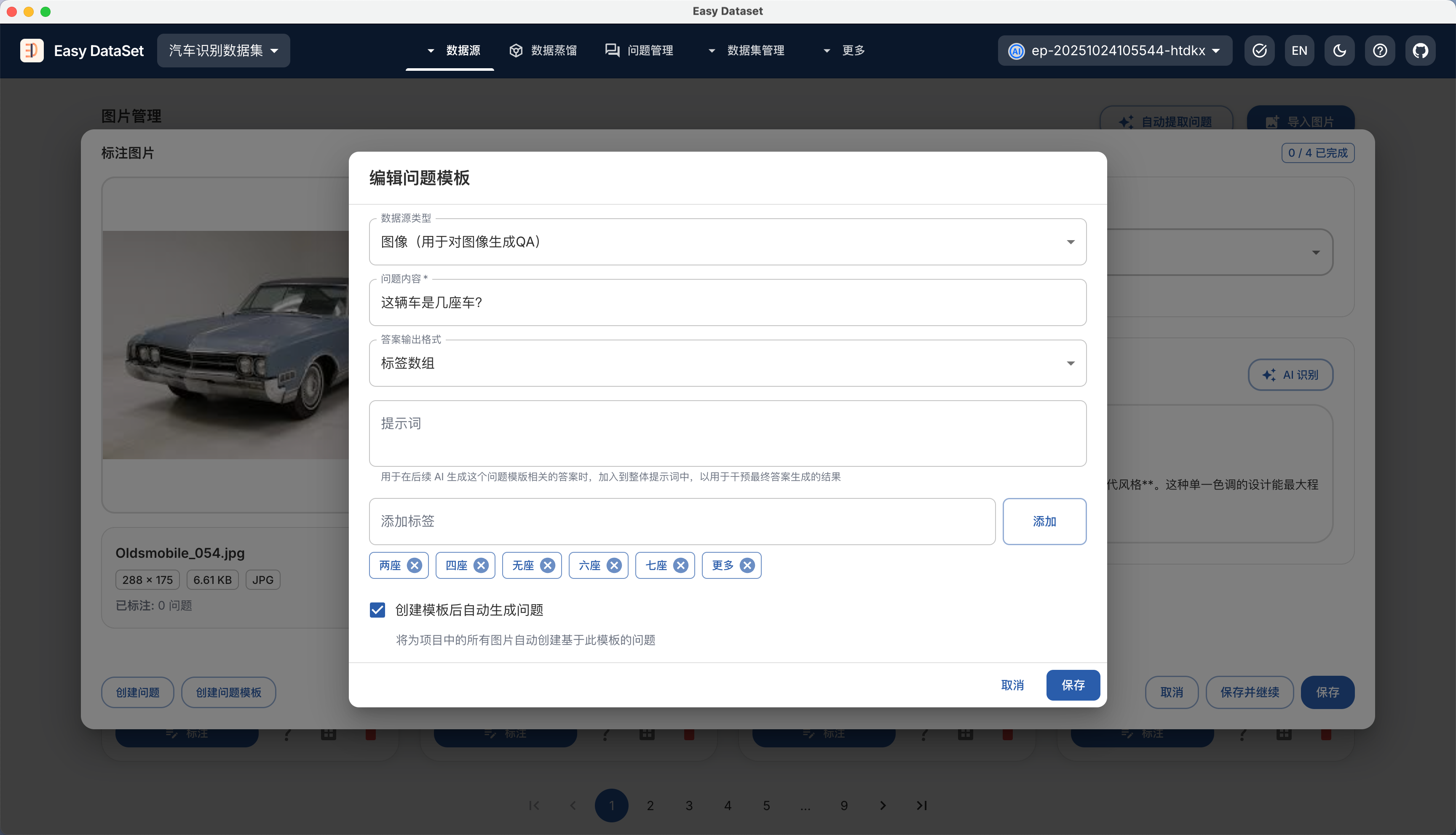
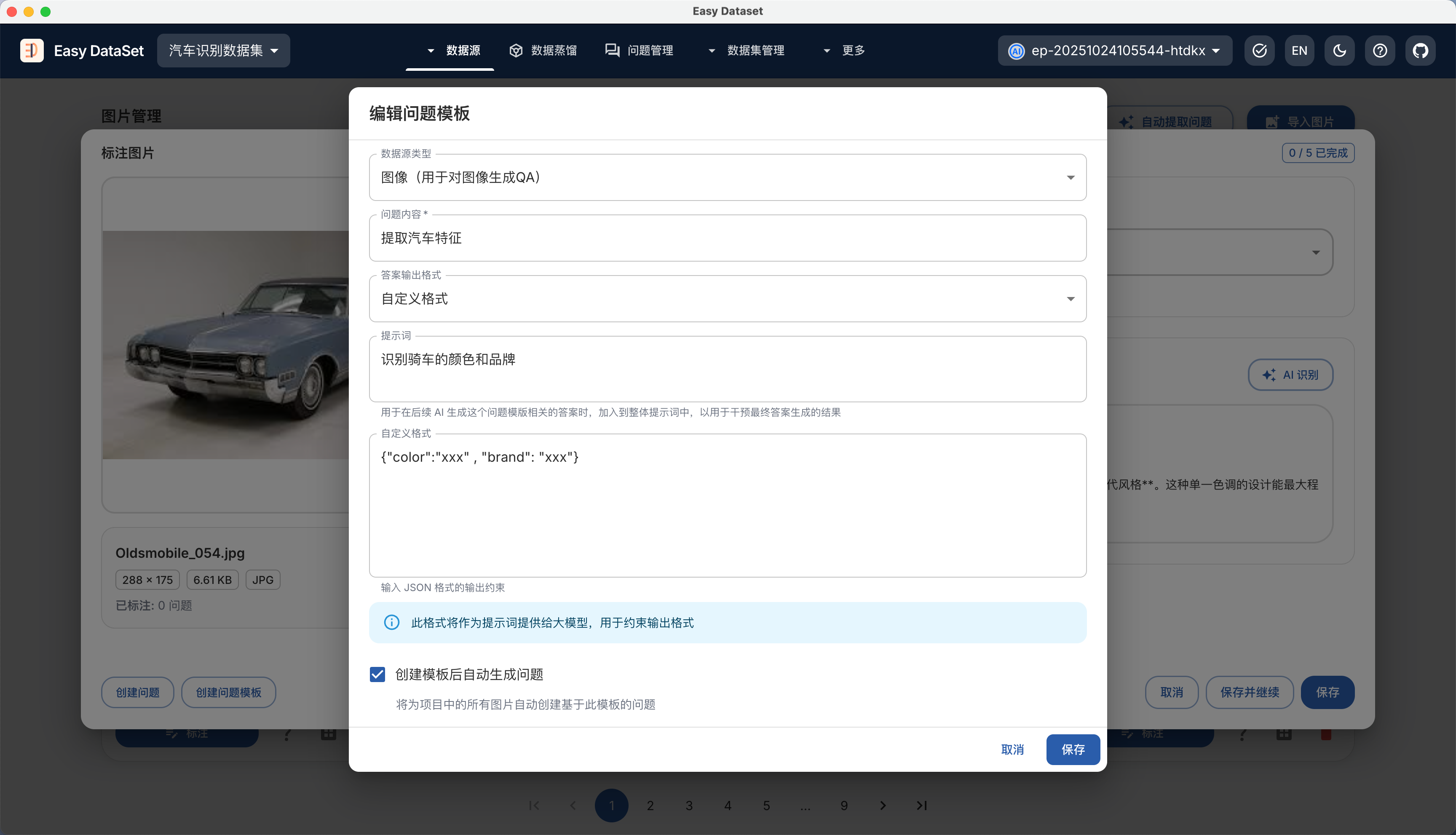
在标注模块我们可以快捷创建问题和问题模版,目前支持三种不同的问题模版:
* AI 生成的答案是普通文本
> 例如:描述这辆车的样子;我们可以通过问题模版的提示词来控制最终答案的预期效果,例如答案必须限定在 20 字内
* AI 生成的答案限定在一些标签下
> 例如:识别汽车是几座车时,一定要限定在固定的几个座位里,避免 AI 冗余输出
* AI 生成的答案固定为某种结构:
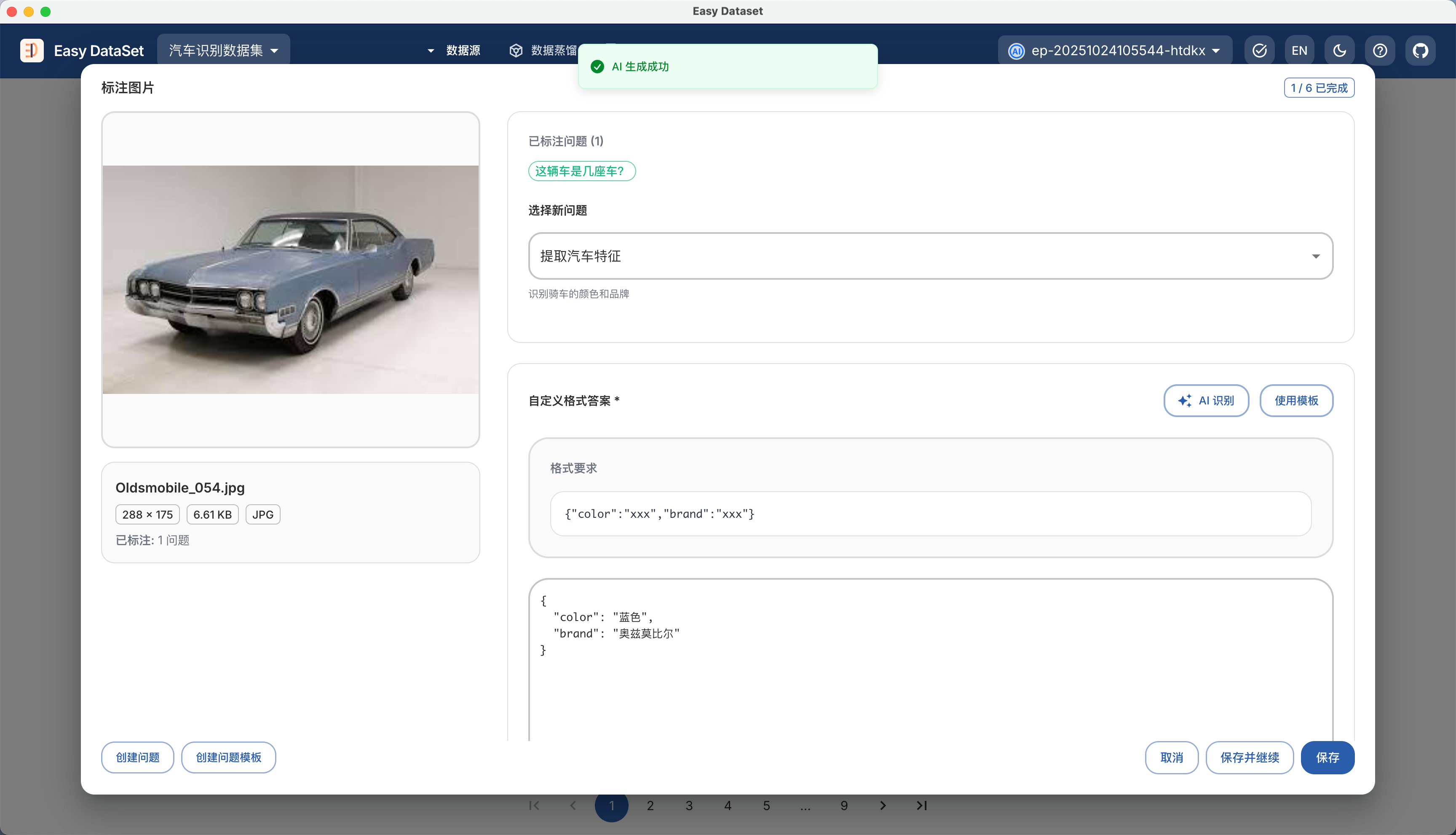
> 例如:提取汽车的更多特征,可能有多个固定的特征需要提取,我们可以自定义模型输出的 JSON 结构,一定要限定在 color、brand 两个字段上,这样每次识别的答案只会包含汽车品牌和颜色数据。
> 注意:创建问题模版后,会为当前所有图像均创建一个对应问题。
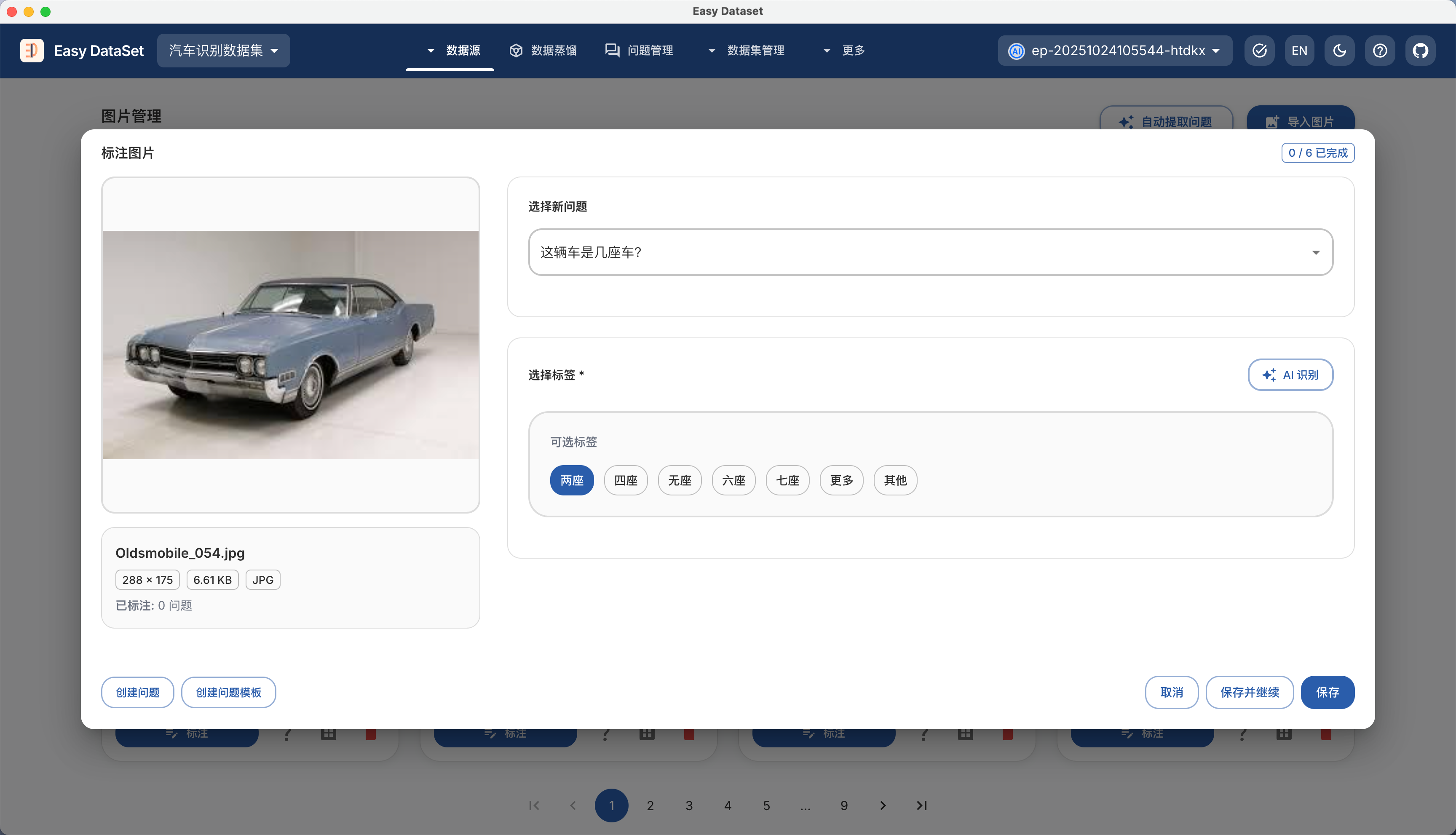
模版创建完成后,我们可以继续在标注界面手动标注这些问题,也可以让 AI 智能生成答案,根据问题模版的不同类型,将会有不同的标注形态:
标注完成一个后,我们可以点击保存并继续,AI 将自动查找下一个还未完成标注的图片或问题:
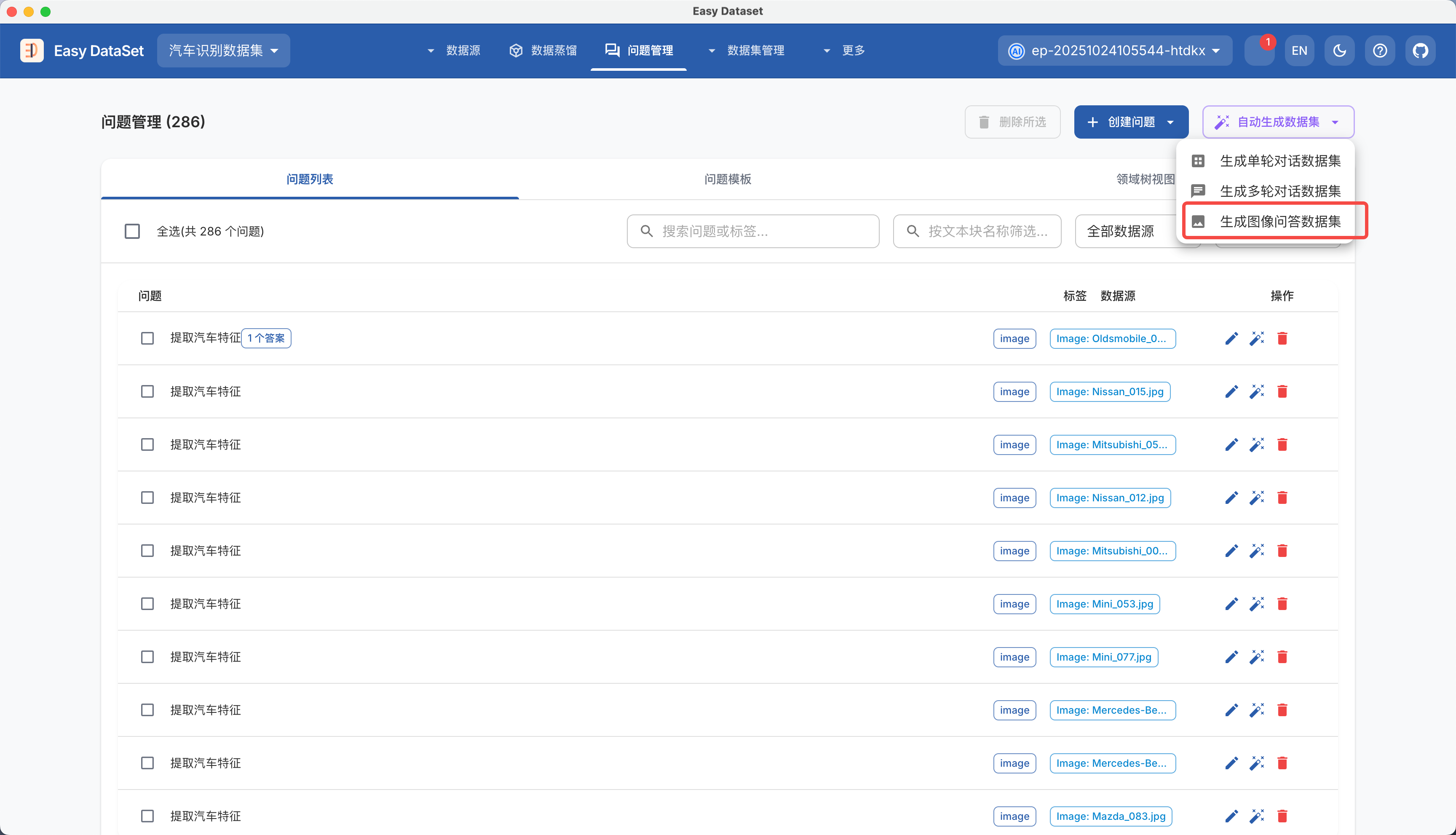
如果嫌手动标注太慢,可以到问题管理模块,点击自动提取数据集 - 生成图像问答数据集,这会自动创建一个后台异步任务:
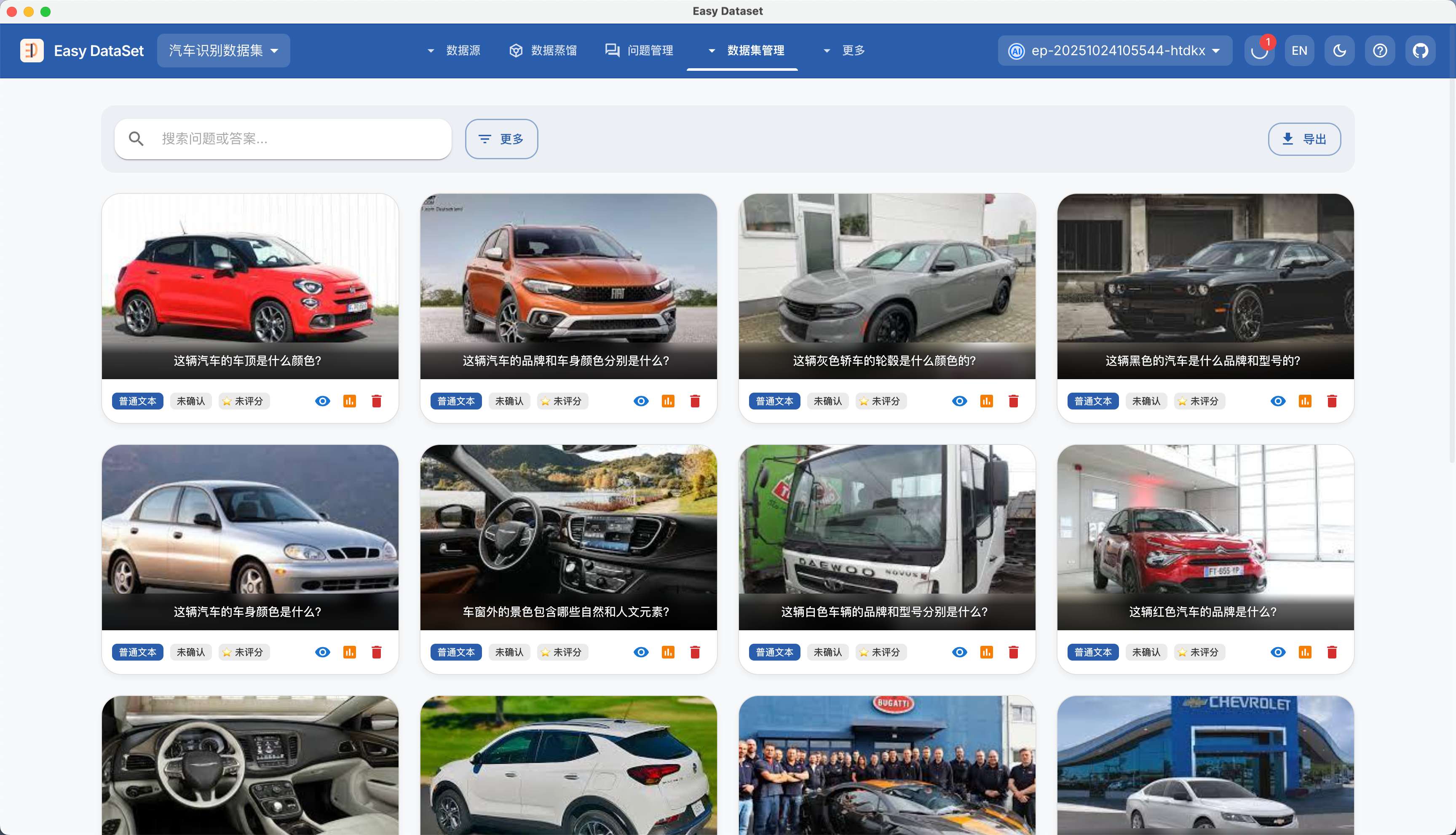
随后,来到图片数据集管理模块,我们可以看到已经生成好的数据集:
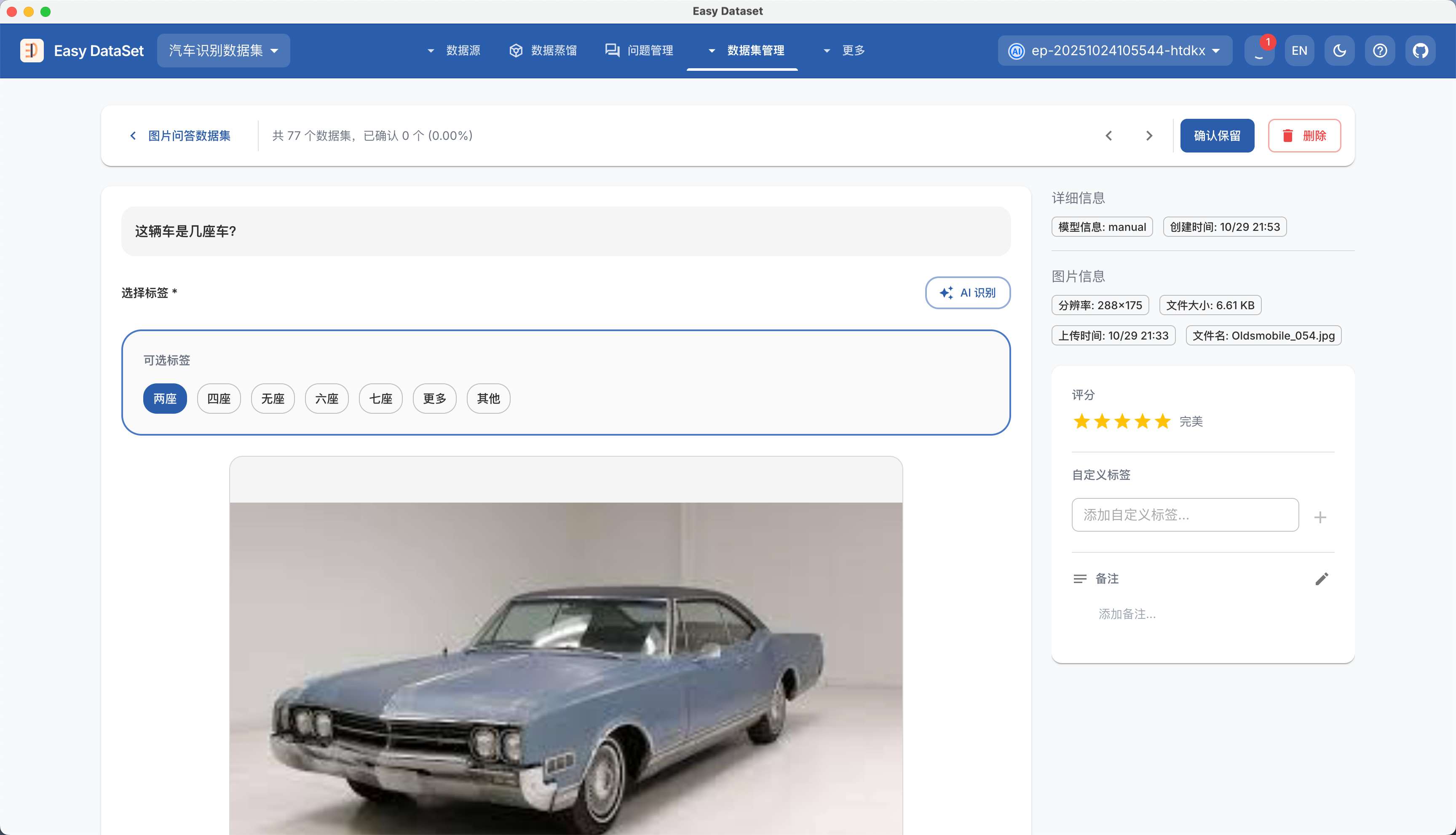
点击数据集详情,可以对答案进行更改,自定义评分、自定义标签、备注等标注操作:
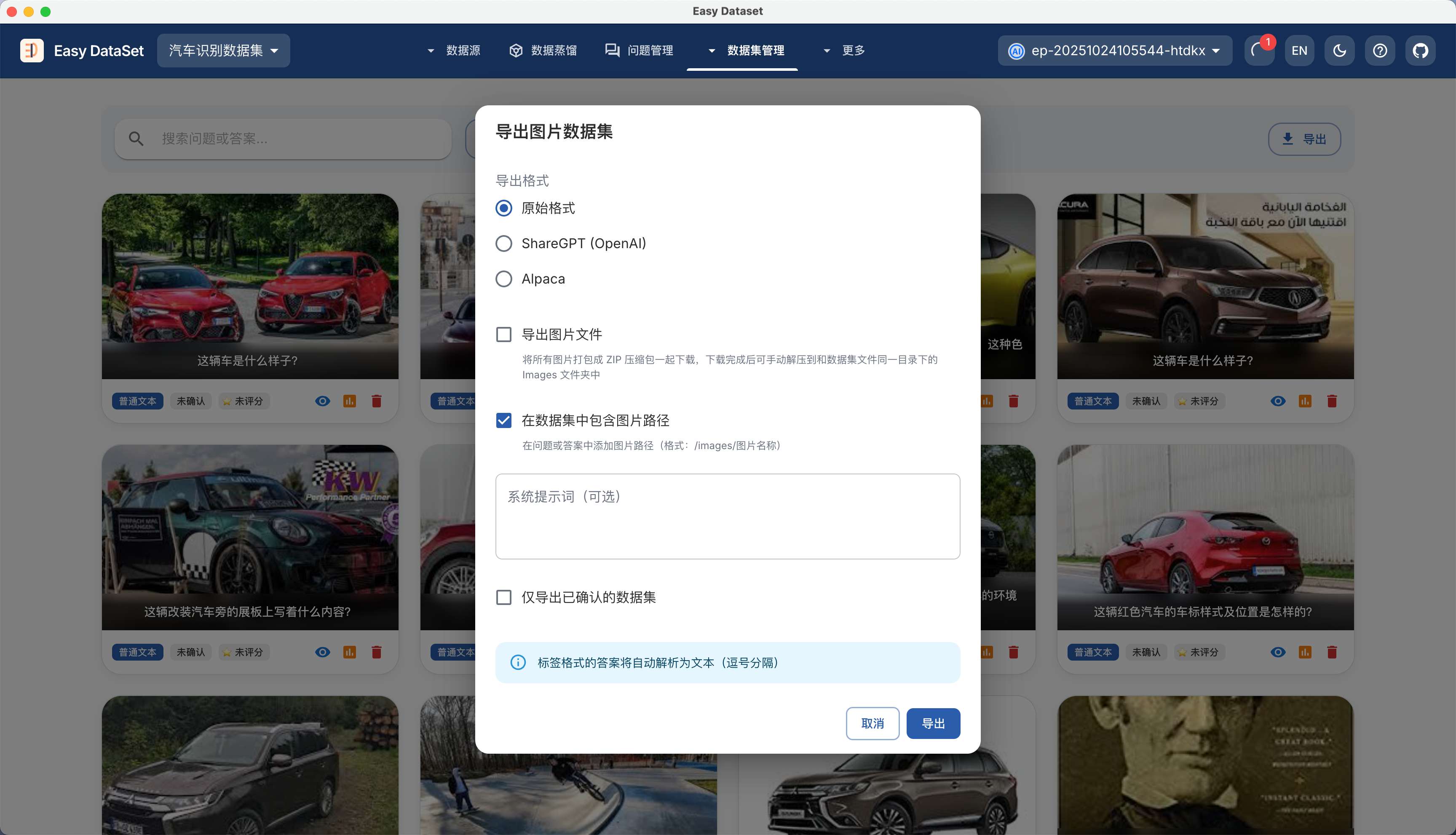
图像数据集导出依然支持多种格式(可选择是否同时导出图片,以及是否在数据集中携带图片路径):
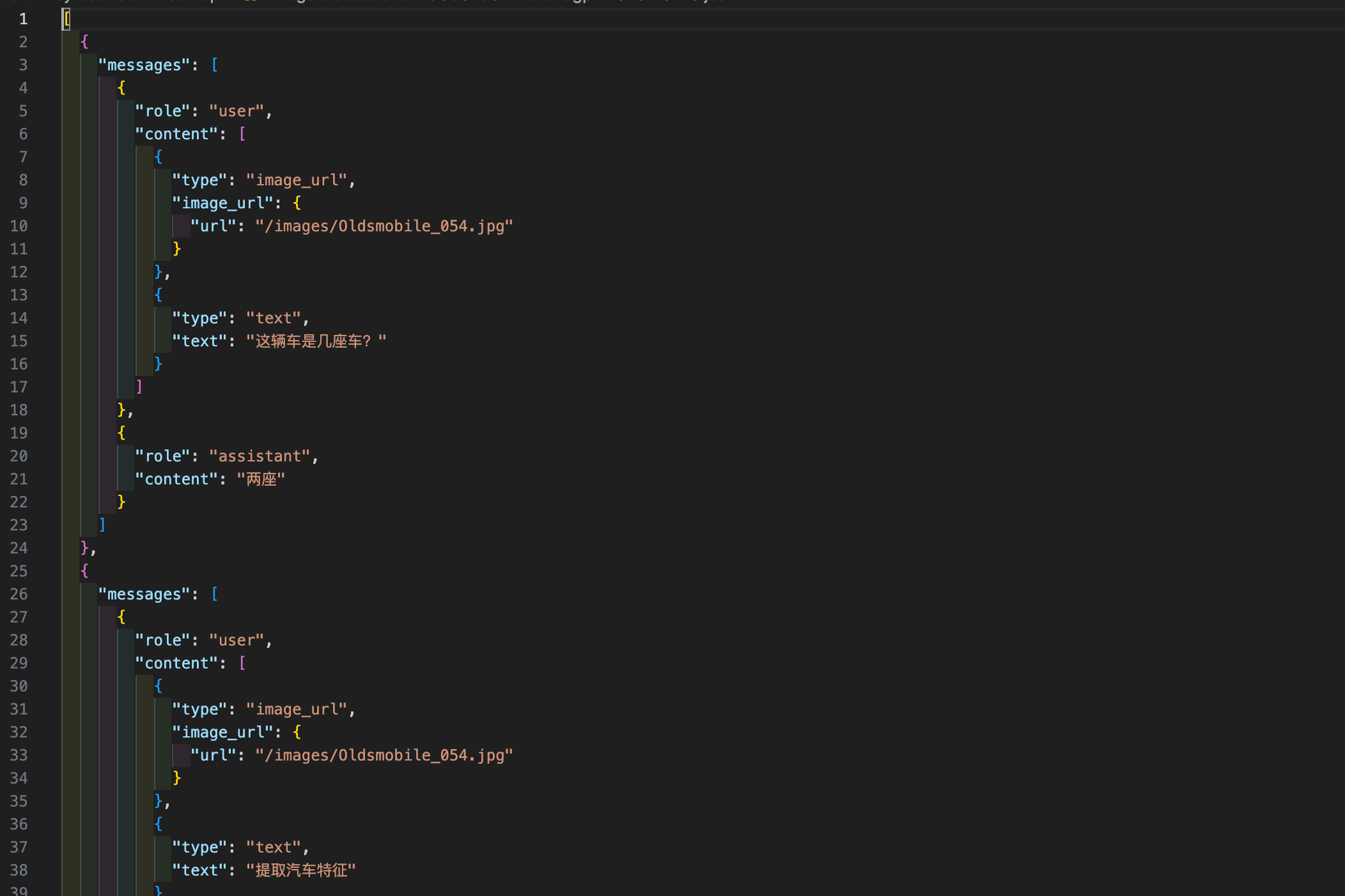
导出的数据集案例:
###
---
# Agent Instructions
This documentation is published with GitBook. GitBook is the documentation platform designed so that both humans and AI agents can read, navigate, and reason over technical content effectively. Learn more at gitbook.com.
## Querying This Documentation
If you need additional information that is not directly available in this page, you can query the documentation by asking a question.
Perform an HTTP GET request on the following URL with the `ask` and `goal` query parameters:
```
GET https://docs.easy-dataset.com/bo-ke/shi-zhan-an-li/an-li-1-sheng-cheng-qi-che-tu-pian-shi-bie-shu-ju-ji.md?ask=&goal=
```
`ask` is the immediate question: it should be specific, self-contained, and written in natural language.
`goal` is what the user is ultimately trying to achieve, the reason they need the answer. Sharing it helps GitBook give you a better, more relevant answer. A goal is most helpful when it describes the outcome the user wants rather than restating the question. For example, with `ask=how do I create an API token`, a goal like `automate deployments from our CI pipeline` lets GitBook tailor the answer to that use case.
The response will contain a direct answer to the question and relevant excerpts and sources from the documentation.
Use this mechanism when the answer is not explicitly present in the current page, you need clarification or additional context, or you want to retrieve related documentation sections.