> For the complete documentation index, see [llms.txt](https://docs.easy-dataset.com/llms.txt). Markdown versions of documentation pages are available by appending `.md` to page URLs; this page is available as [Markdown](https://docs.easy-dataset.com/bo-ke/shi-zhan-an-li/an-li-2-ping-lun-qing-gan-fen-lei-shu-ju-ji.md).
# 案例2:评论情感分类数据集
在刚刚的场景中,我们已经使用过问题模版了,这一个非常灵活的功能,它也可以用在文本数据集上,我们来具一个构造文本分类数据集的例子。
> 目标场景:现有一份微博评论数据,希望基于大模型分析评论是正面还是负面的,用于训练情感分类模型。
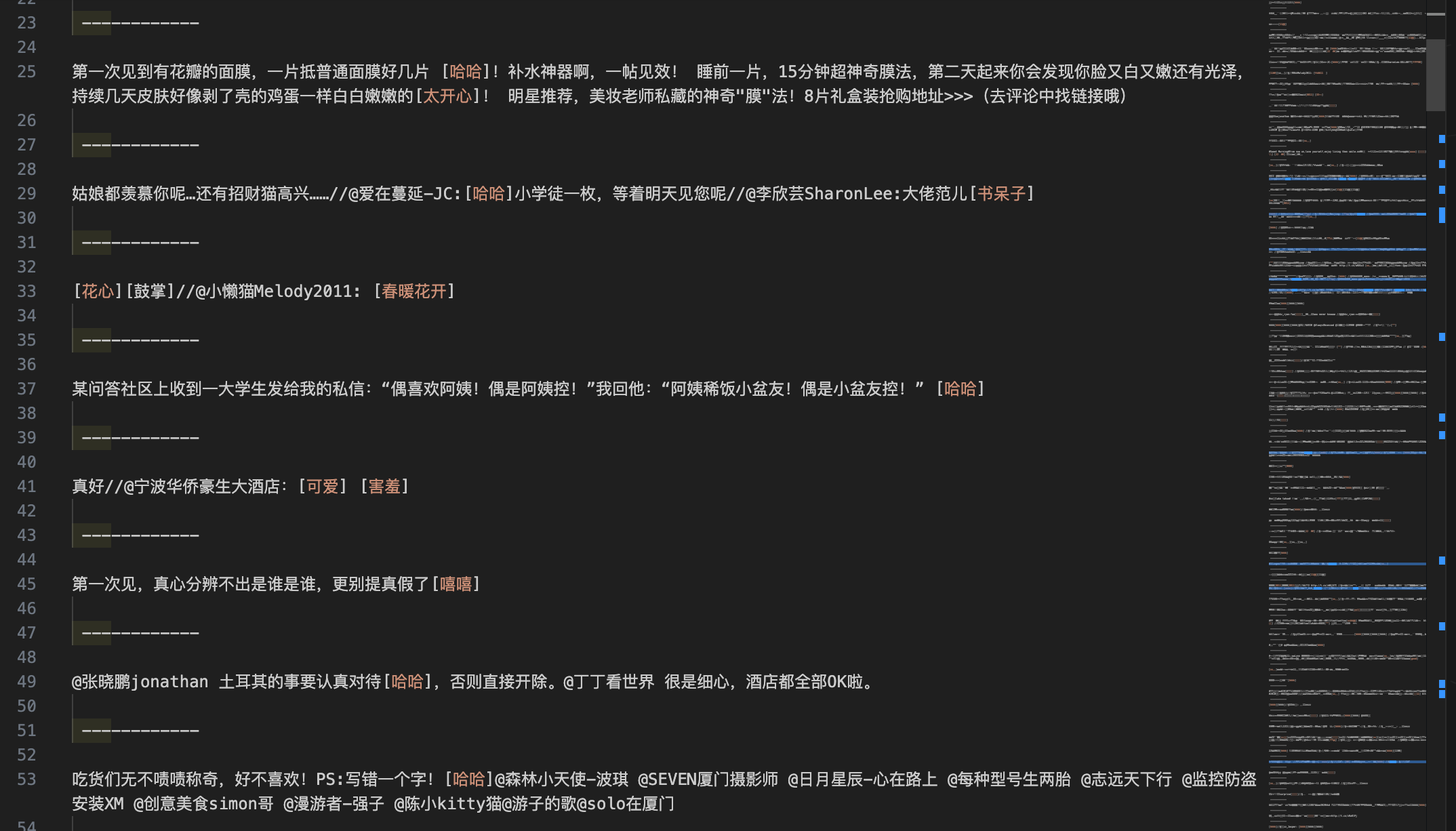
数据示例:使用固定的 `--------` 分隔符进行分割:
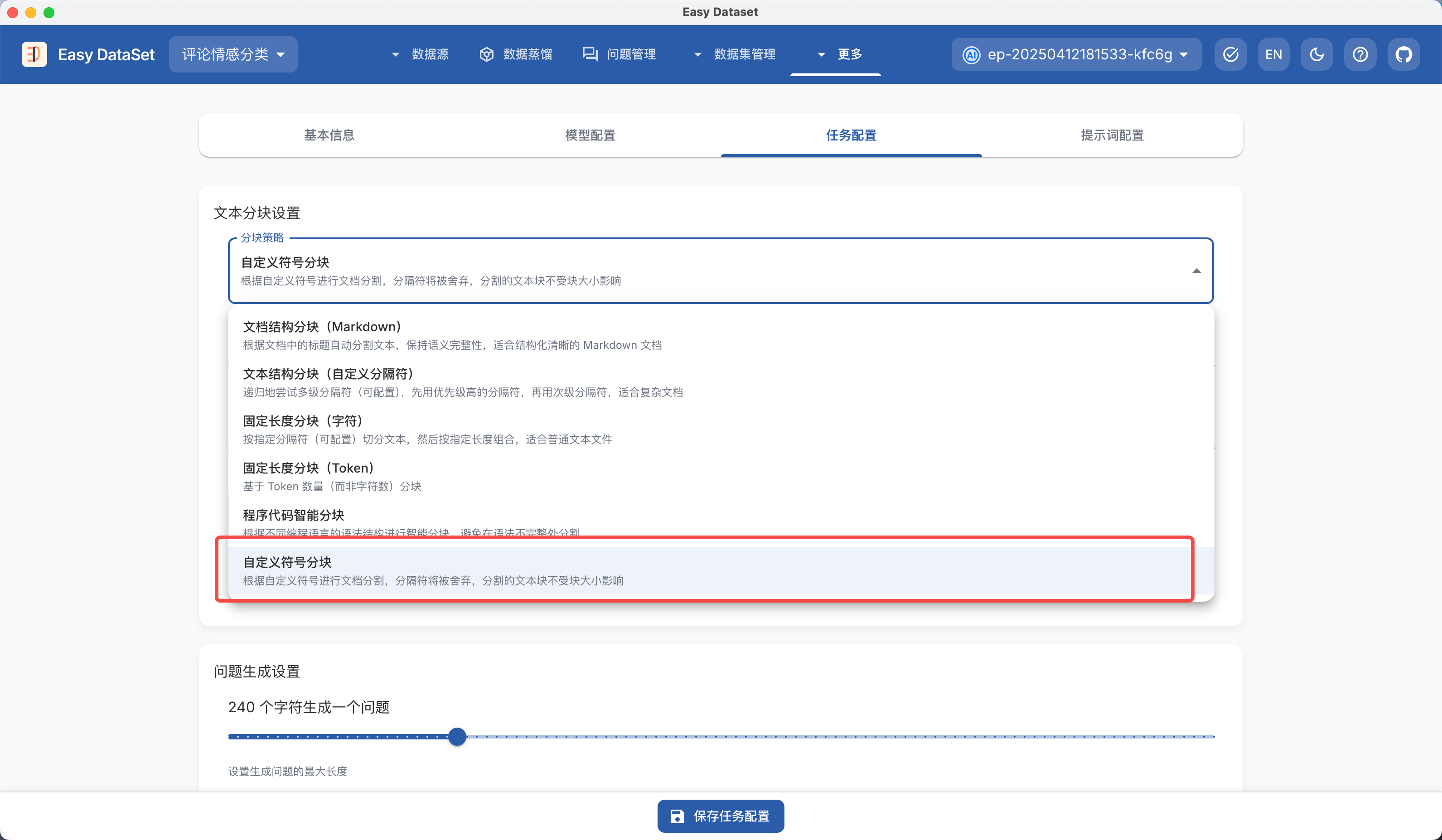
在 EDS 中,我们首先要在任务设置中将分块策略改为 “自定义符号分块” (在自定义分隔符处输入:`---------`),这种策略会严格按照给定的分割符进行分块,并且会忽略分隔符,不受文本块的大小限制:
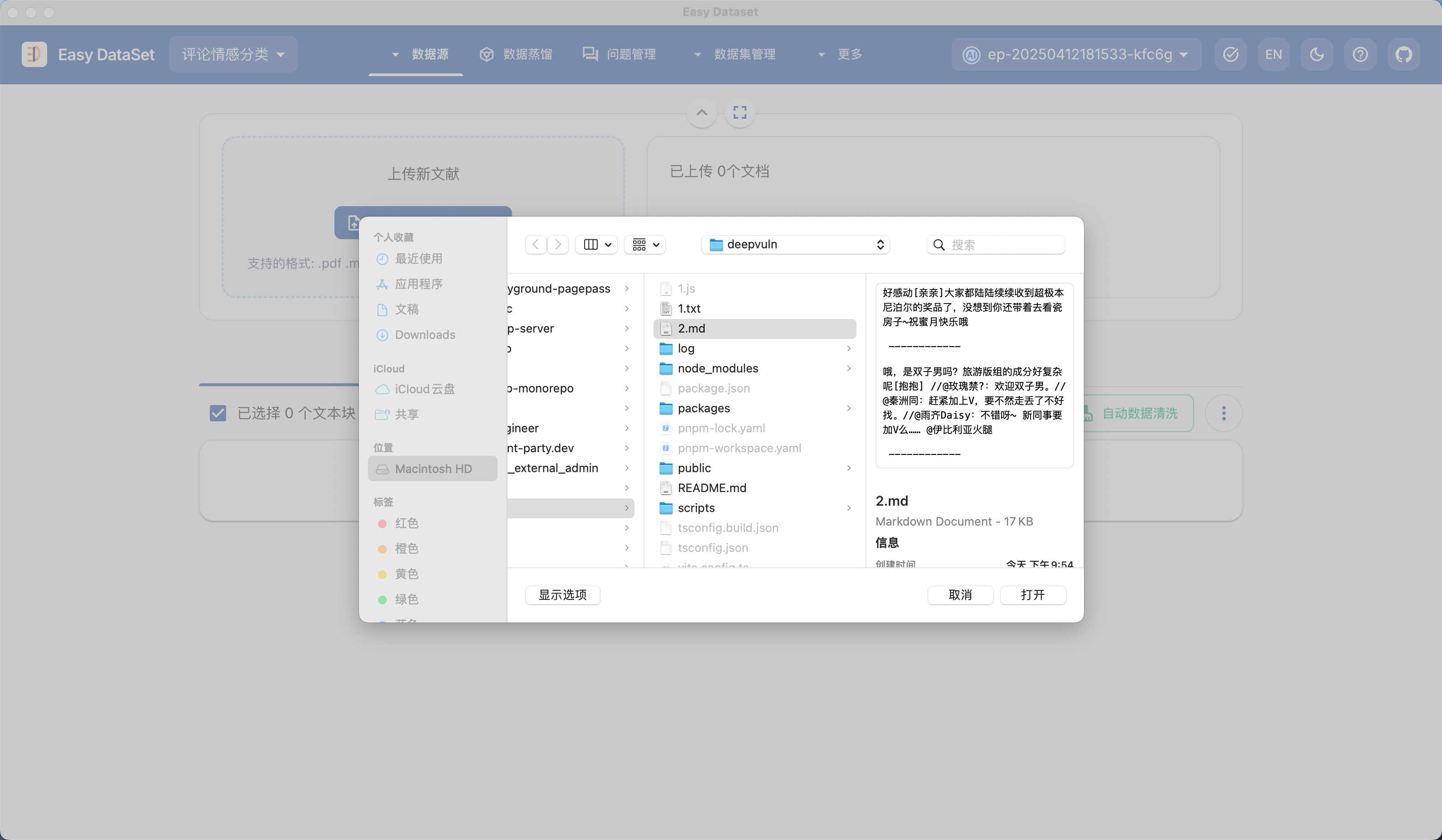
然后我们来到文献处理模块,导入这份配置:
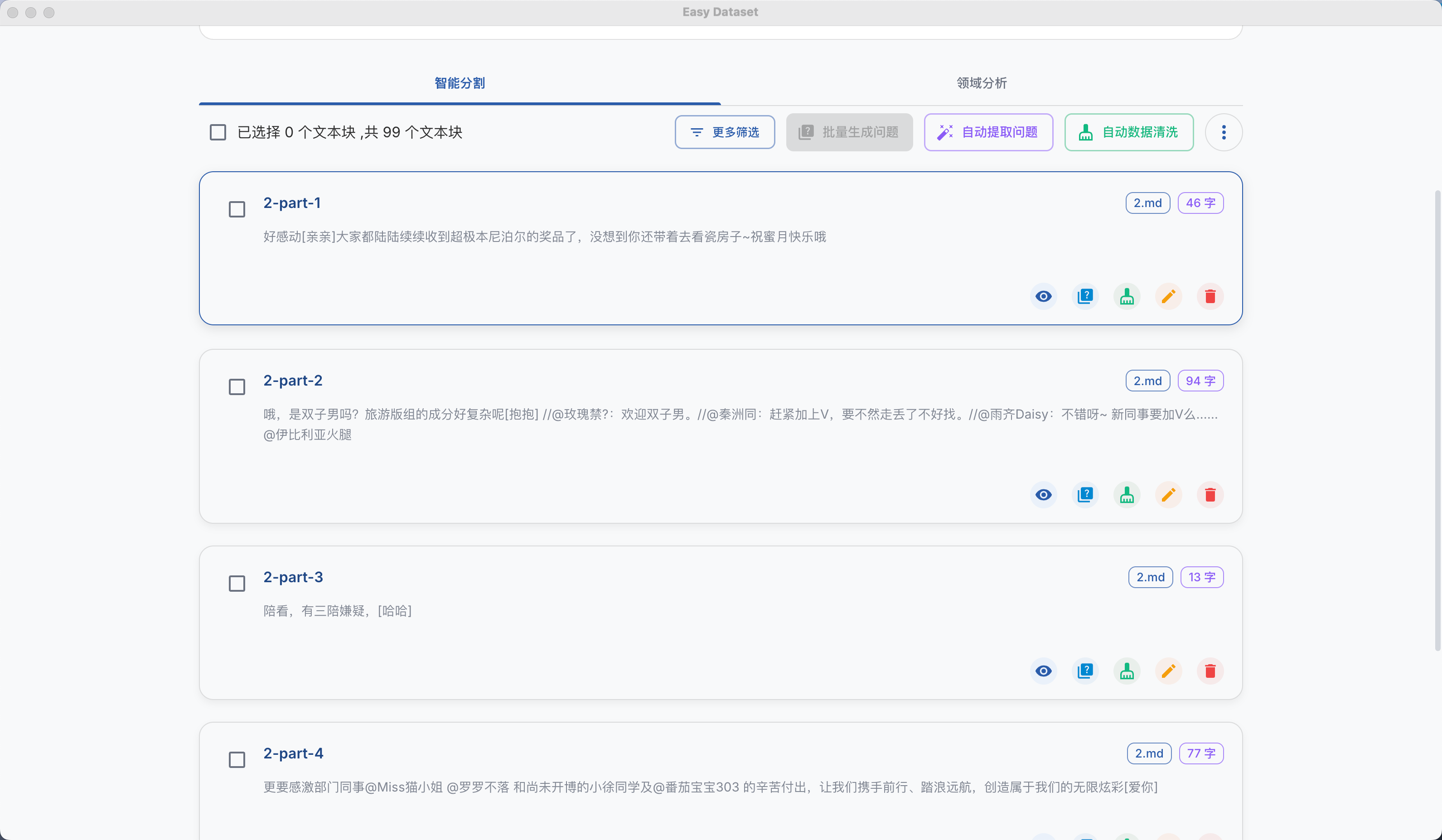
然后我们将得到按照评论内容分割的文本块:
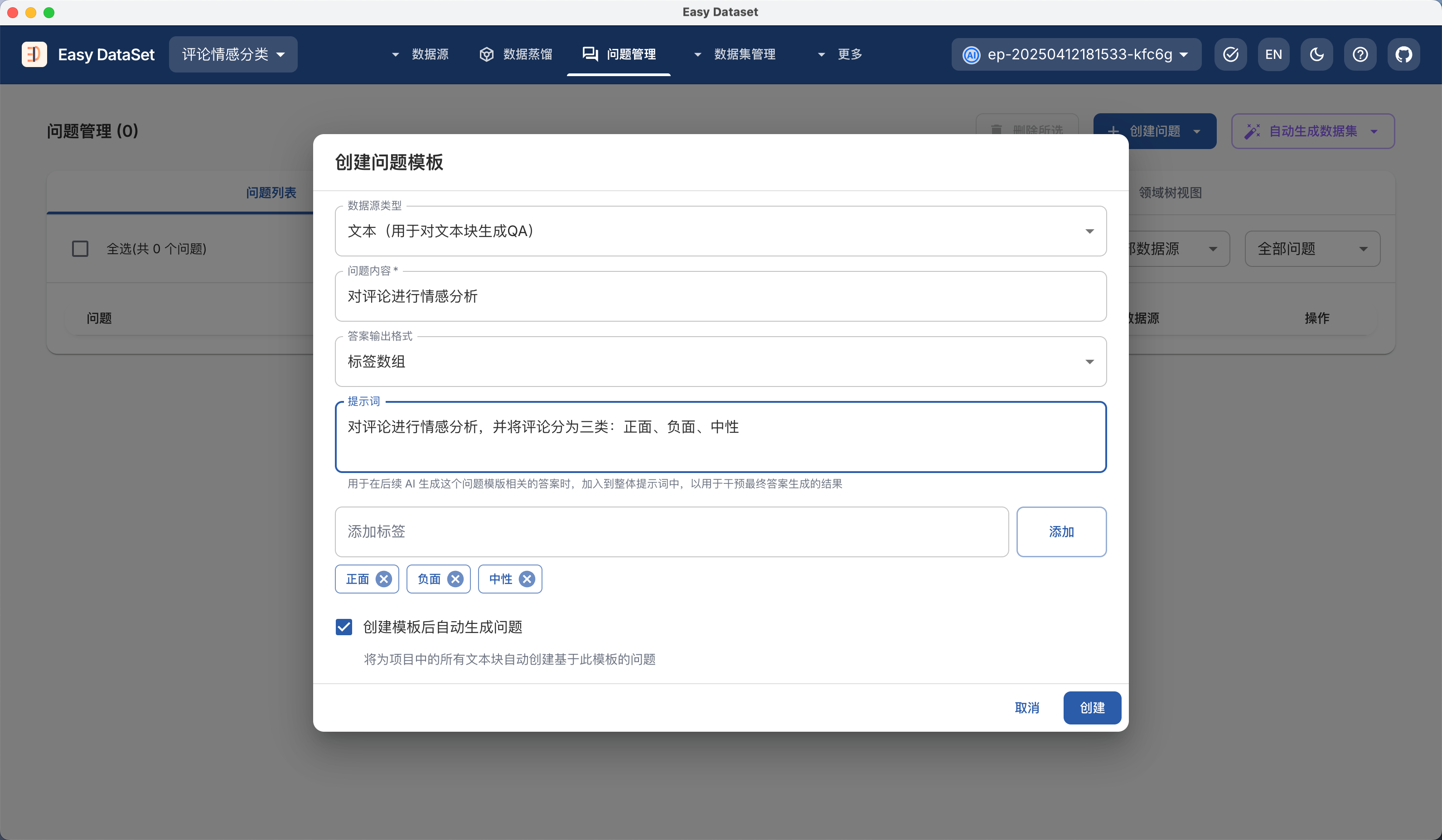
这时,我们来到问题管理,创建一个问题模版:
* 在问题中输入:“对评论进行情感分析”
* 提示词填写:“对评论进行情感分析,并将评论分为三类:正面、负面、中性”
* 定义三个标签:正面、负面、中性
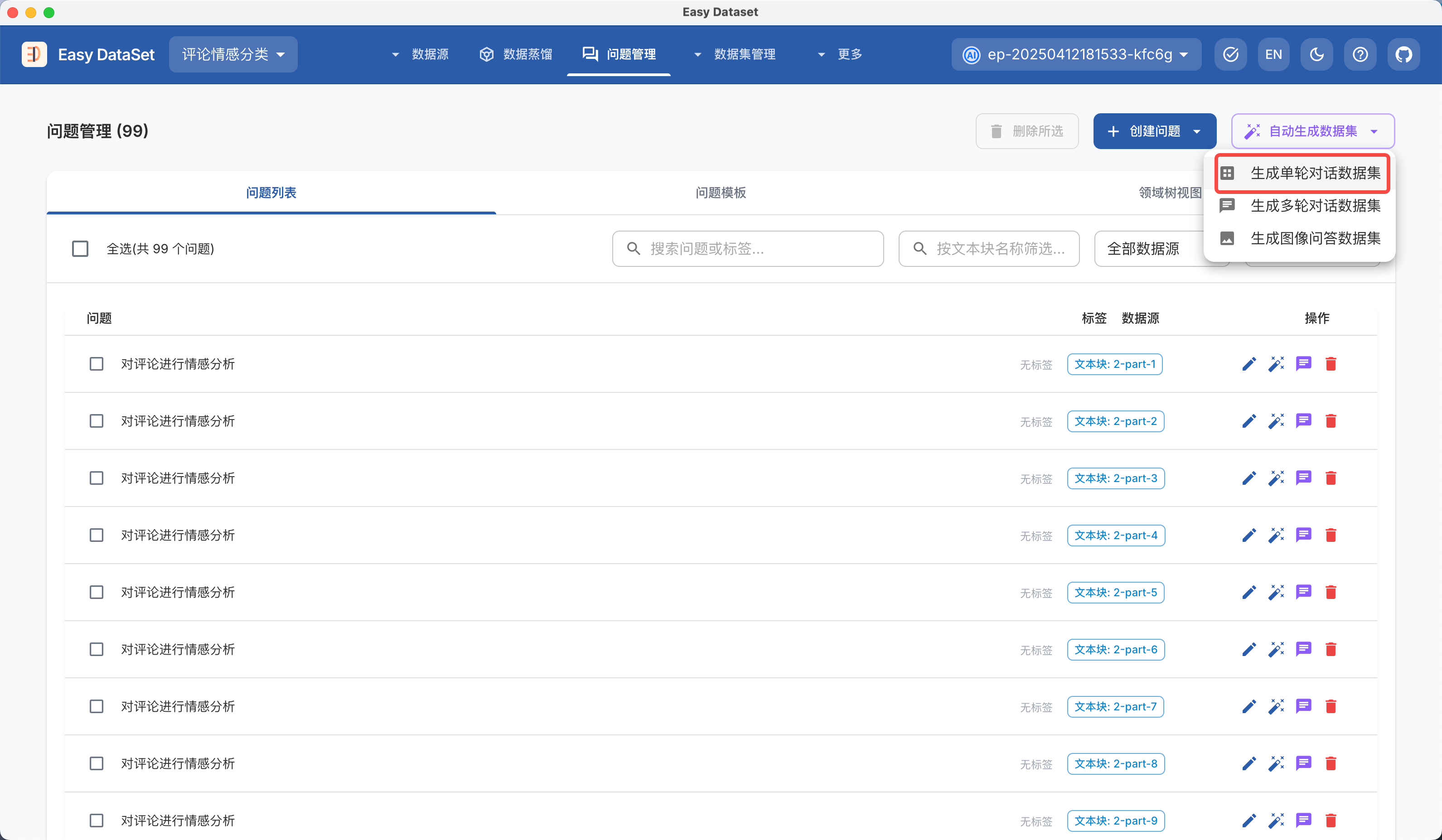
然后我们看到 EDS 为每个文本块都创建了这个问题,我们点击自动提取数据集 - 单轮对话数据集:
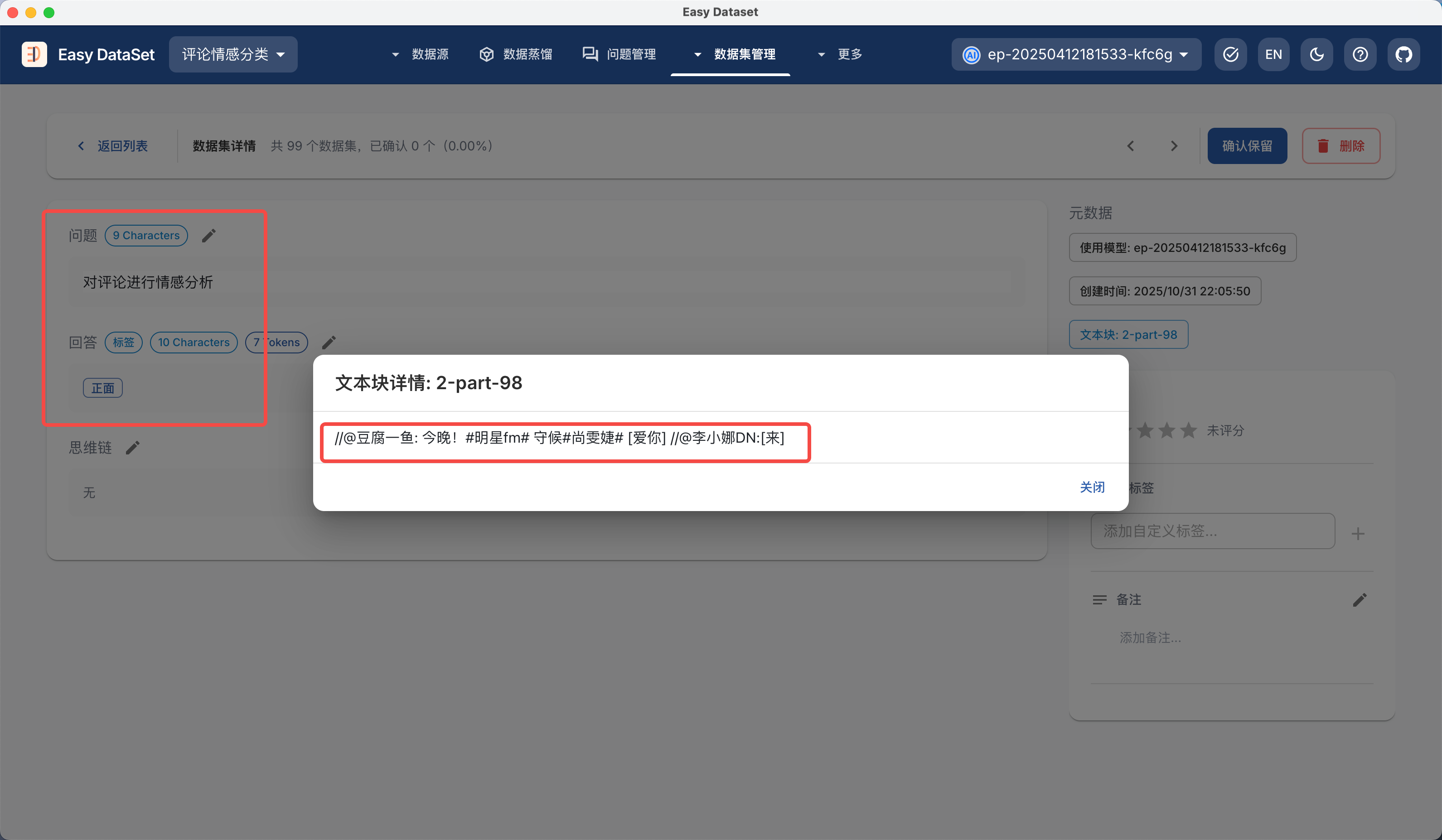
然后我们在数据集详情可以看到对文本块(评论)的分析结果,答案只分布在了正面、负面、中性这三个标签内:
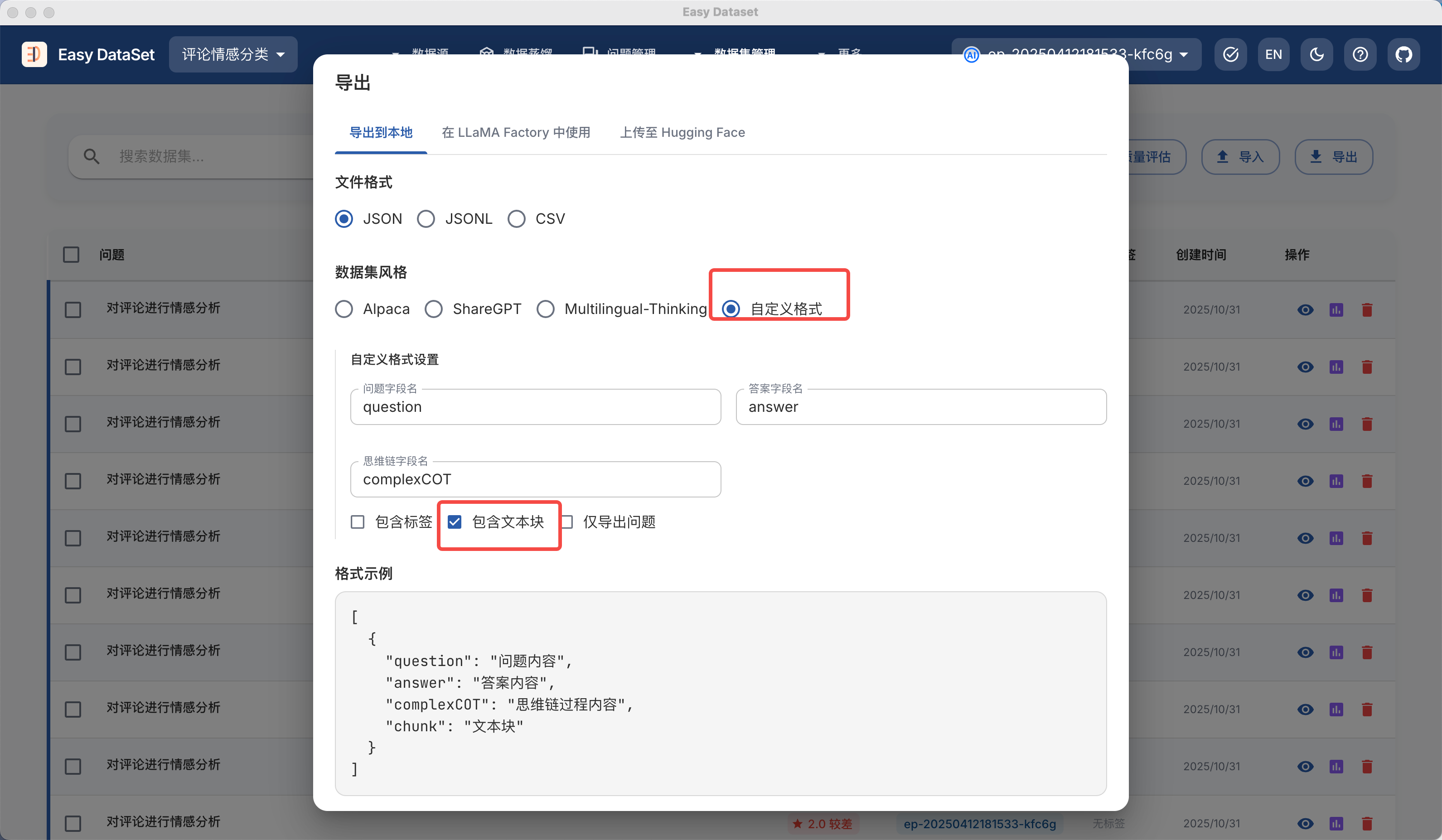
在导出数据集时,我们选择自定义格式,并勾选包含文本块:
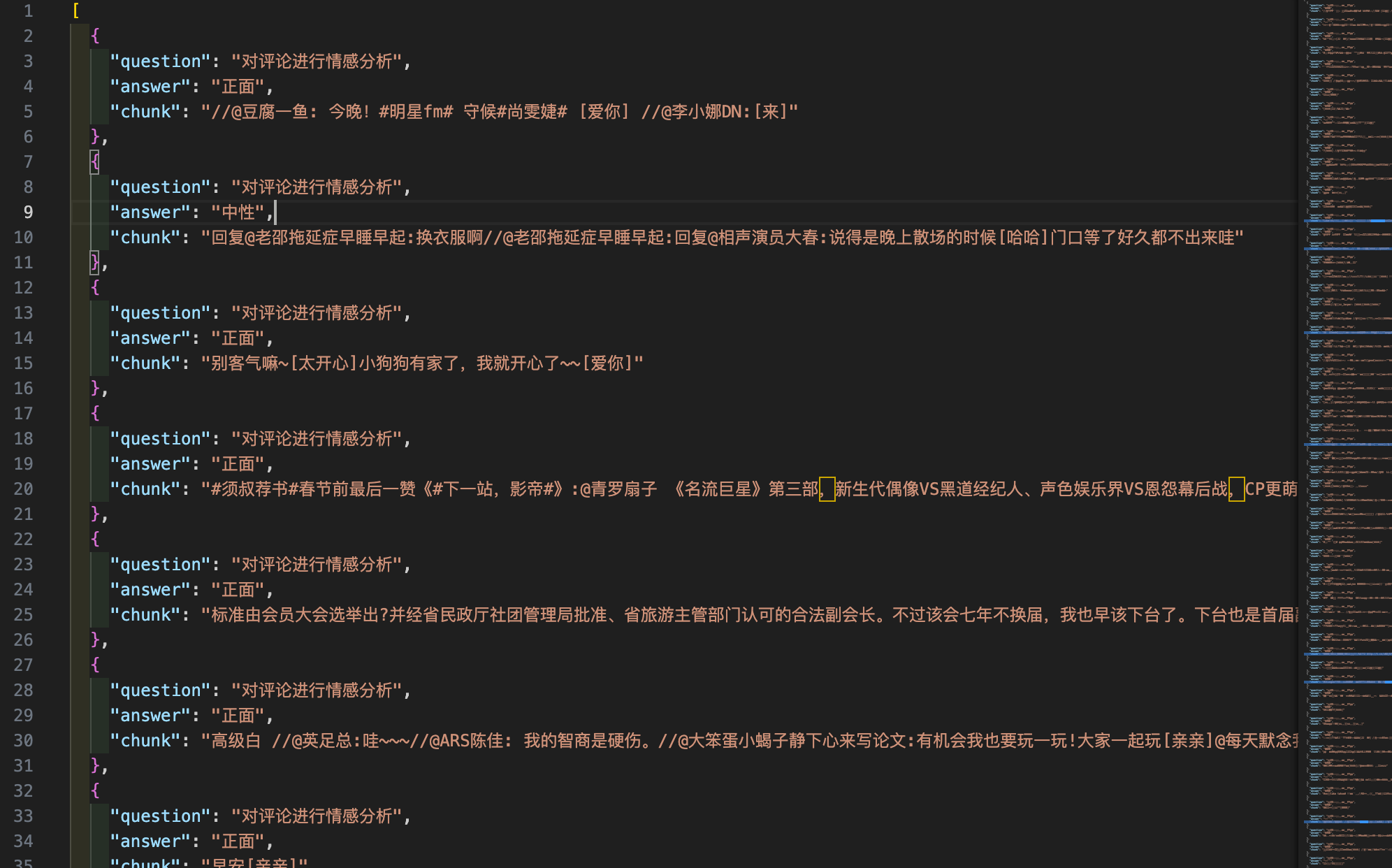
然后我们就得到了一份评论情感分类数据集:
###
---
# Agent Instructions
This documentation is published with GitBook. GitBook is the documentation platform designed so that both humans and AI agents can read, navigate, and reason over technical content effectively. Learn more at gitbook.com.
## Querying This Documentation
If you need additional information that is not directly available in this page, you can query the documentation by asking a question.
Perform an HTTP GET request on the following URL with the `ask` and `goal` query parameters:
```
GET https://docs.easy-dataset.com/bo-ke/shi-zhan-an-li/an-li-2-ping-lun-qing-gan-fen-lei-shu-ju-ji.md?ask=&goal=
```
`ask` is the immediate question: it should be specific, self-contained, and written in natural language.
`goal` is what the user is ultimately trying to achieve, the reason they need the answer. Sharing it helps GitBook give you a better, more relevant answer. A goal is most helpful when it describes the outcome the user wants rather than restating the question. For example, with `ask=how do I create an API token`, a goal like `automate deployments from our CI pipeline` lets GitBook tailor the answer to that use case.
The response will contain a direct answer to the question and relevant excerpts and sources from the documentation.
Use this mechanism when the answer is not explicitly present in the current page, you need clarification or additional context, or you want to retrieve related documentation sections.