> For the complete documentation index, see [llms.txt](https://docs.easy-dataset.com/llms.txt). Markdown versions of documentation pages are available by appending `.md` to page URLs; this page is available as [Markdown](https://docs.easy-dataset.com/ed/en/questions/question-generation.md).
# Question Generation
{% hint style="info" %}
Extract questions from the split text blocks and establish domain tags for the questions.
{% endhint %}
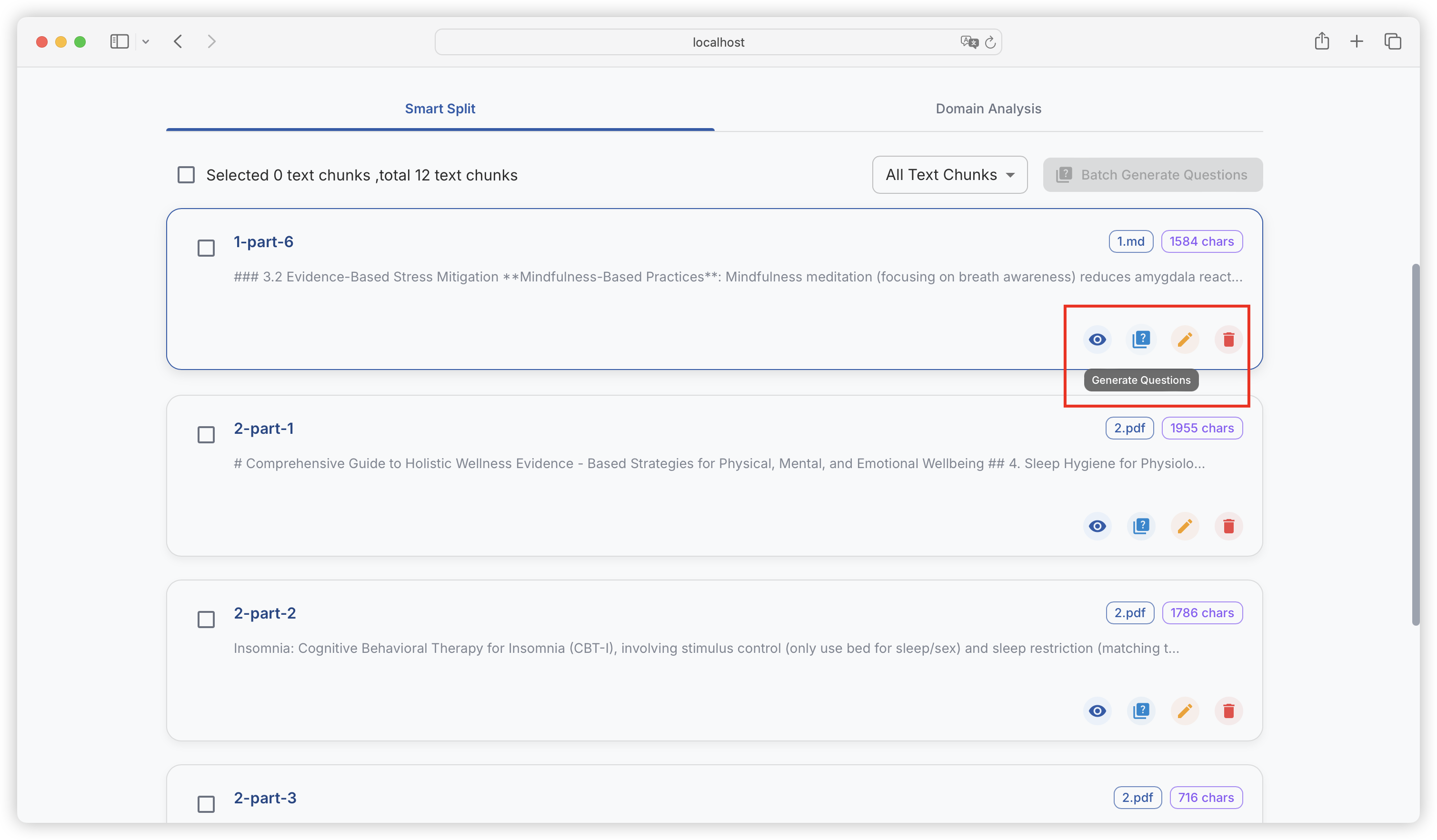
### Generate Questions from a Single Text Block
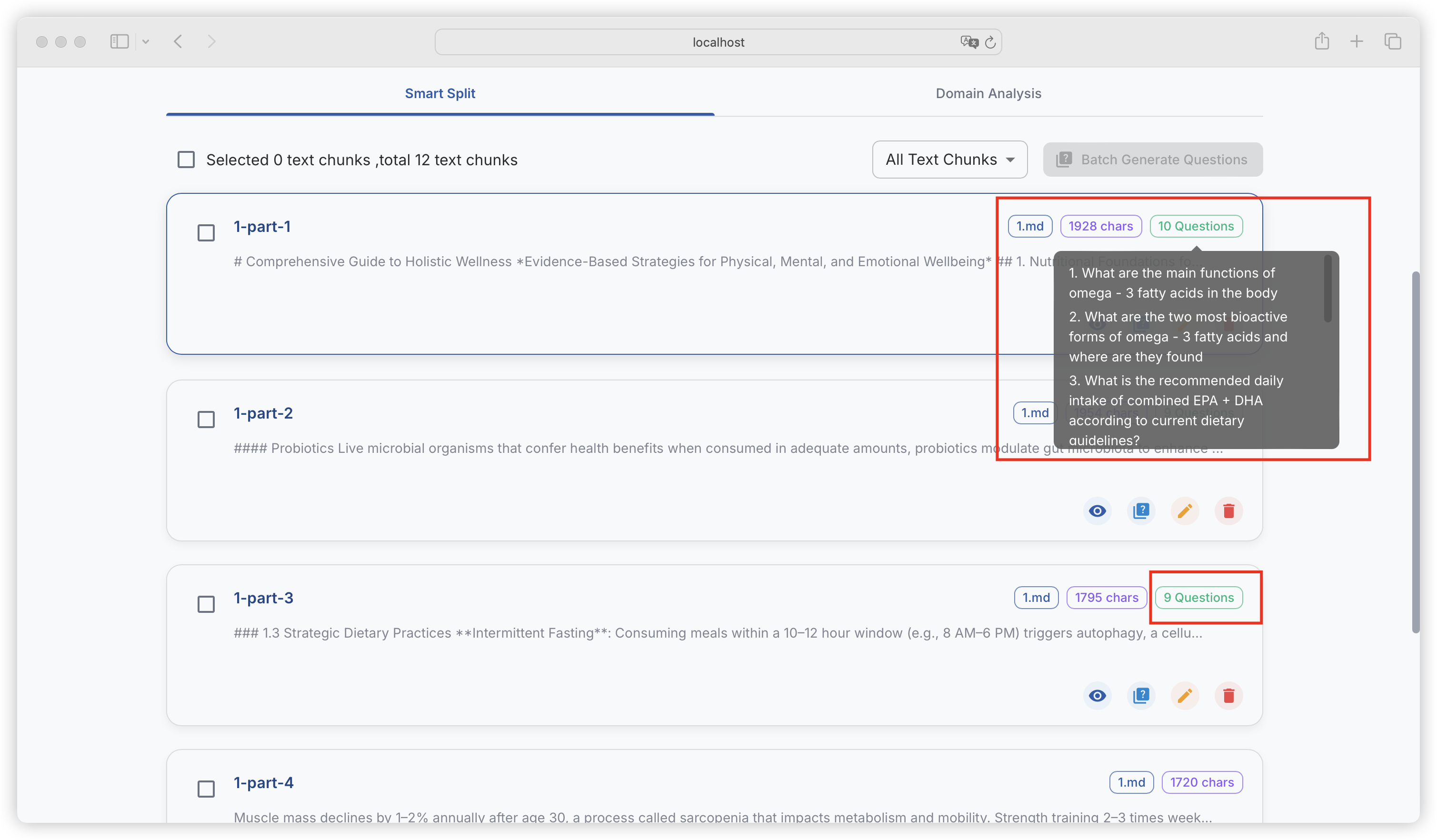
After the task is completed, you can view the generated questions in the text block.
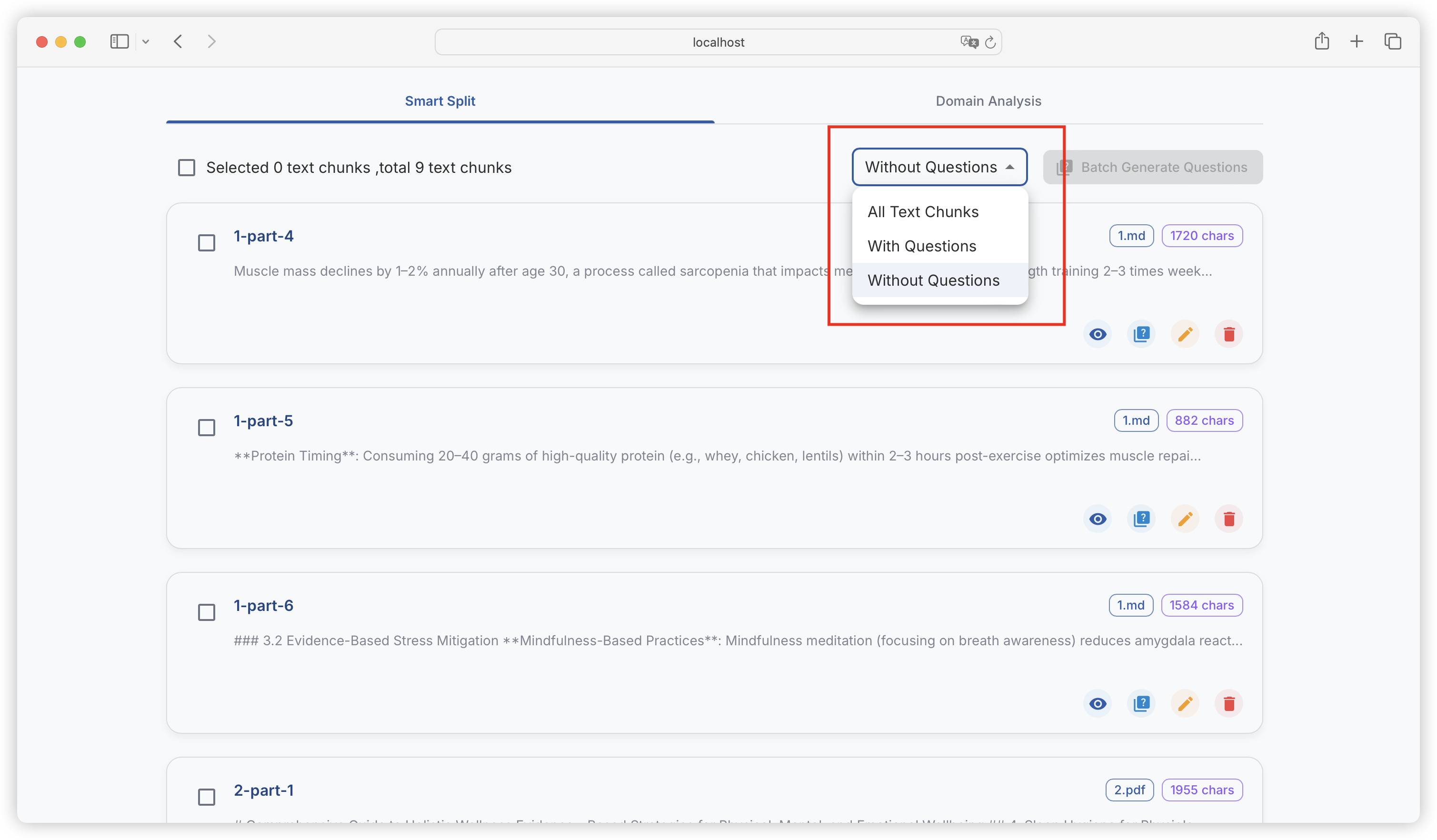
You can filter text blocks with generated questions and text blocks without generated questions:
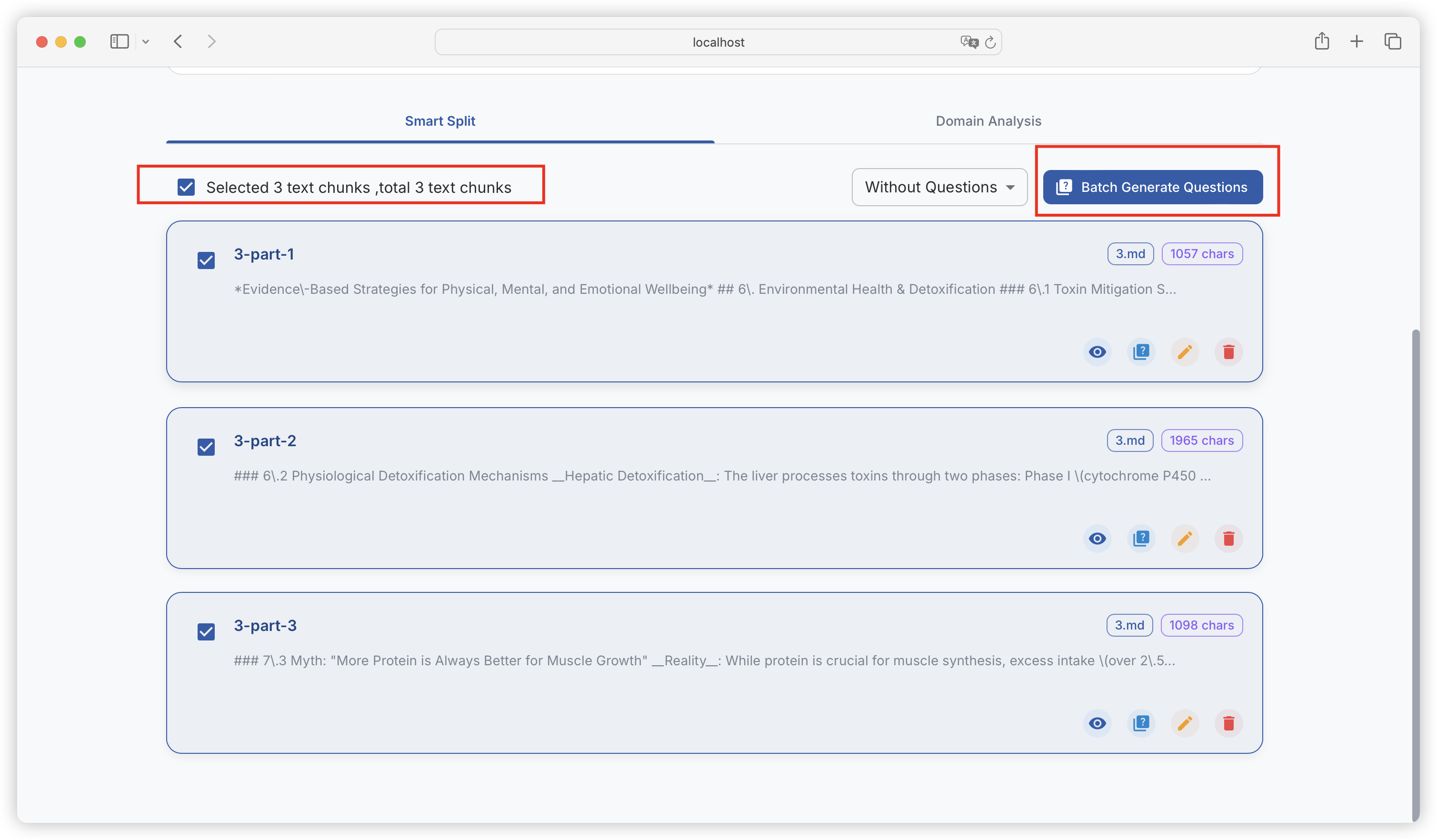
### Batch Question Generation
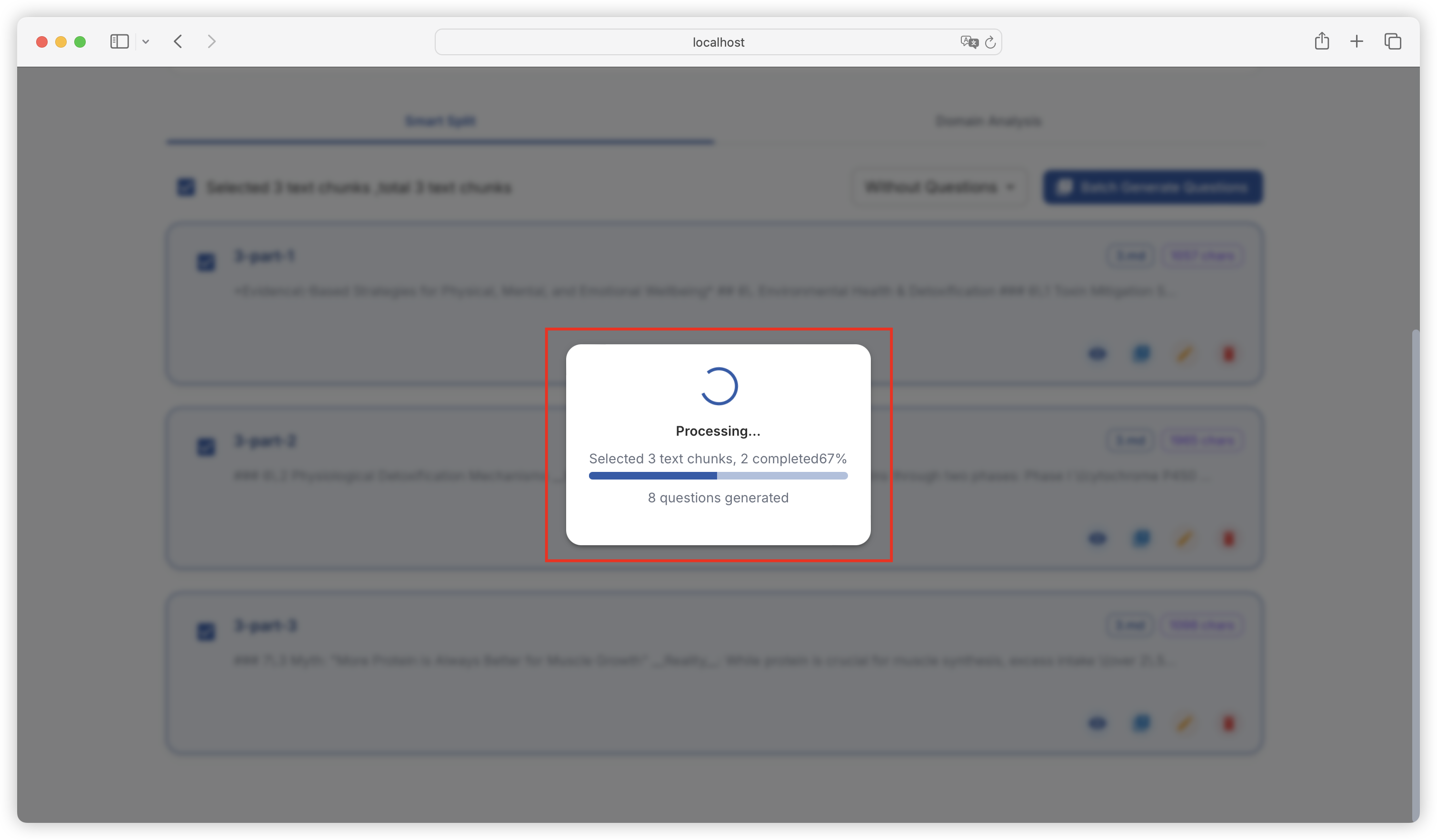
You can batch select or select all text blocks, and construct questions in batch:
You can view the progress of batch tasks in real-time:
{% hint style="info" %}
When a batch task is in progress, closing or refreshing the current page will interrupt the task. You can open a new page to check the already generated questions in question management.
{% endhint %}
### Question Generation Configuration
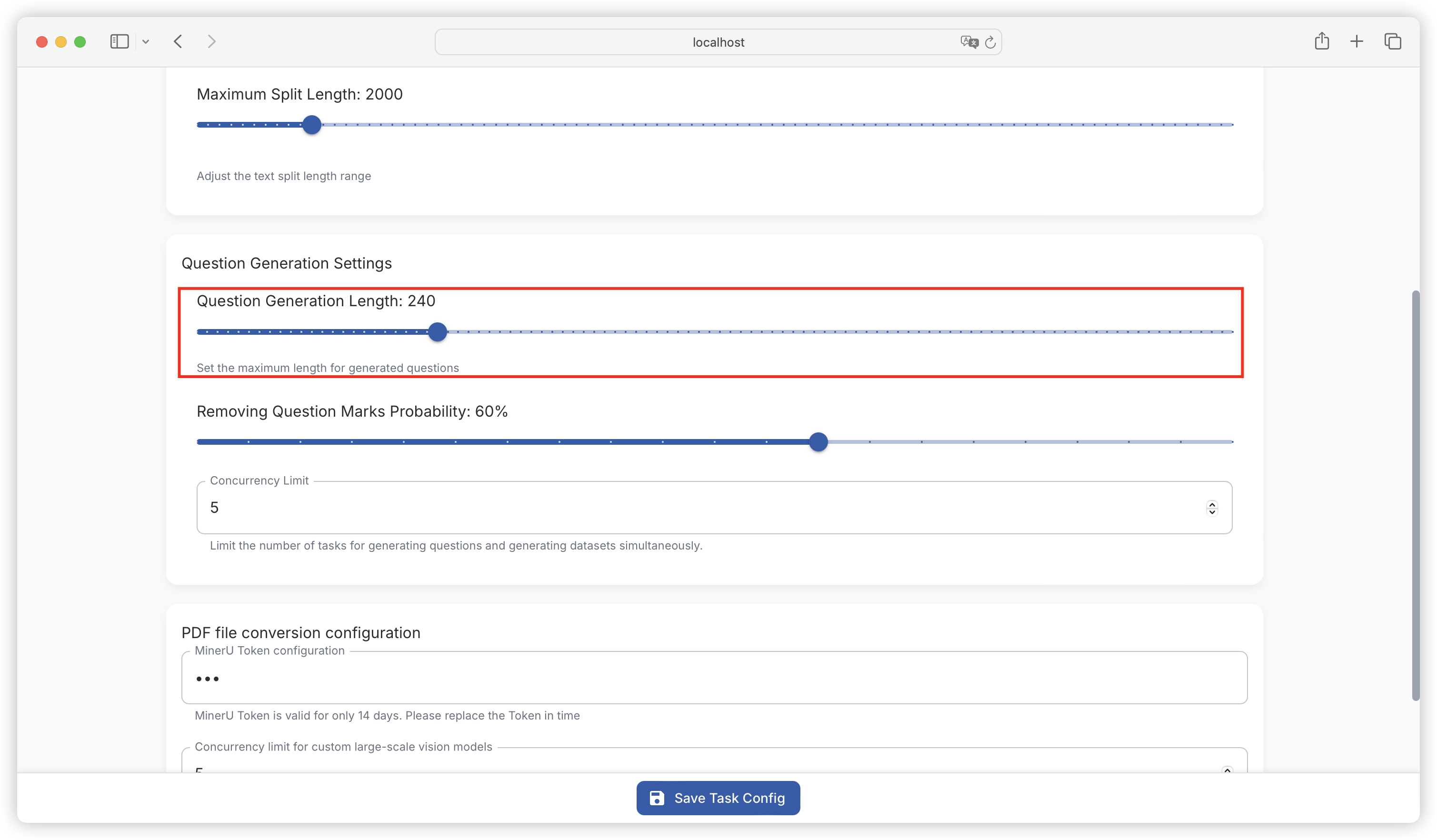
How many questions are generated for each text block is determined by the maximum length for generating questions in "Project Settings - Task Settings". The default setting is to generate one question per 240 characters. For text blocks of around 2000 characters, about 8 questions will be generated. You can flexibly adjust this according to the information density of your literature:
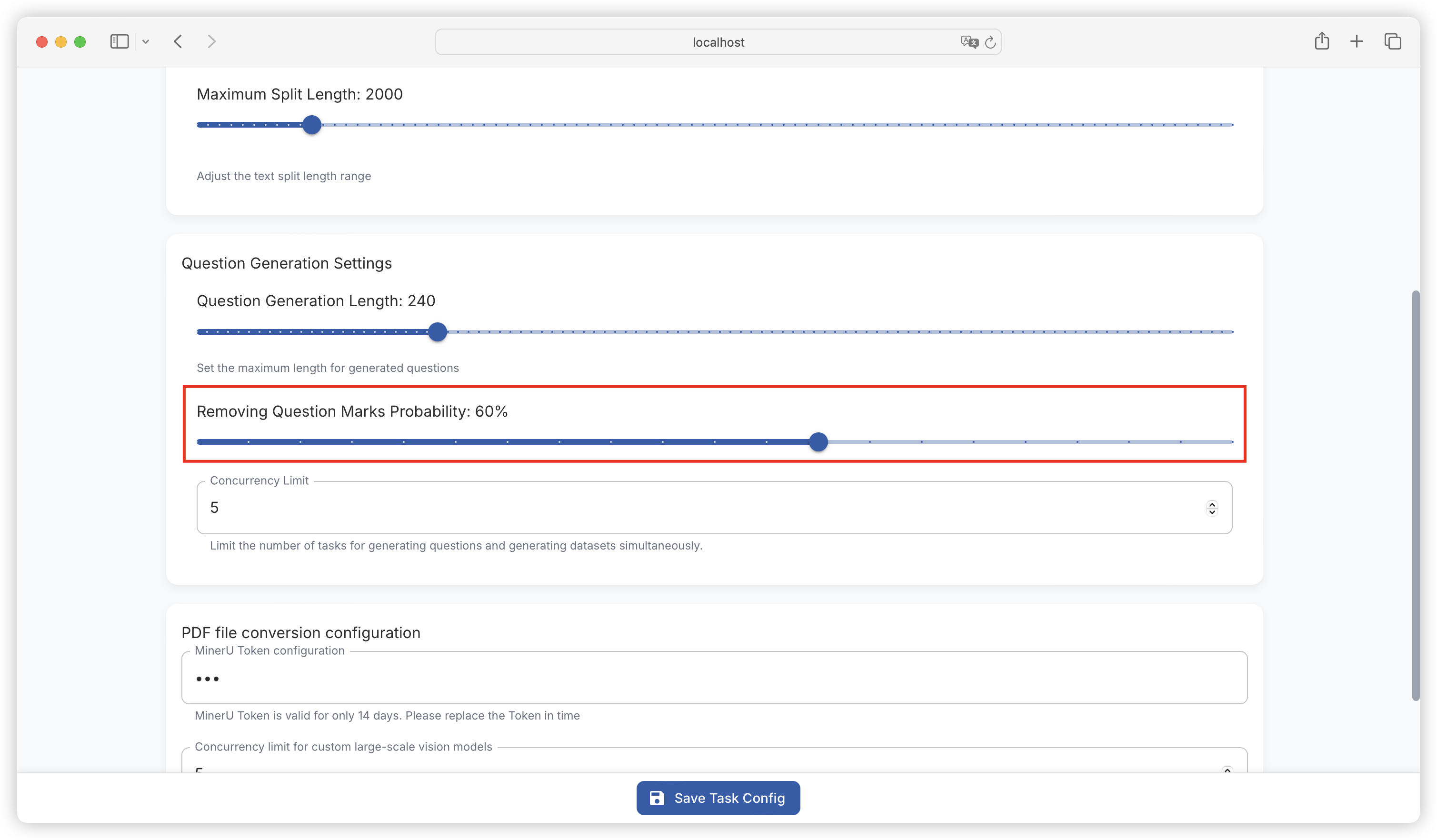
You can also control the proportion of question marks (?) to be removed in the generated questions (default will remove 60%).
{% hint style="success" %}
In actual Q\&A tasks, users' questions do not always include question marks. Removing a certain percentage of question marks helps improve fine-tuning effects.
{% endhint %}
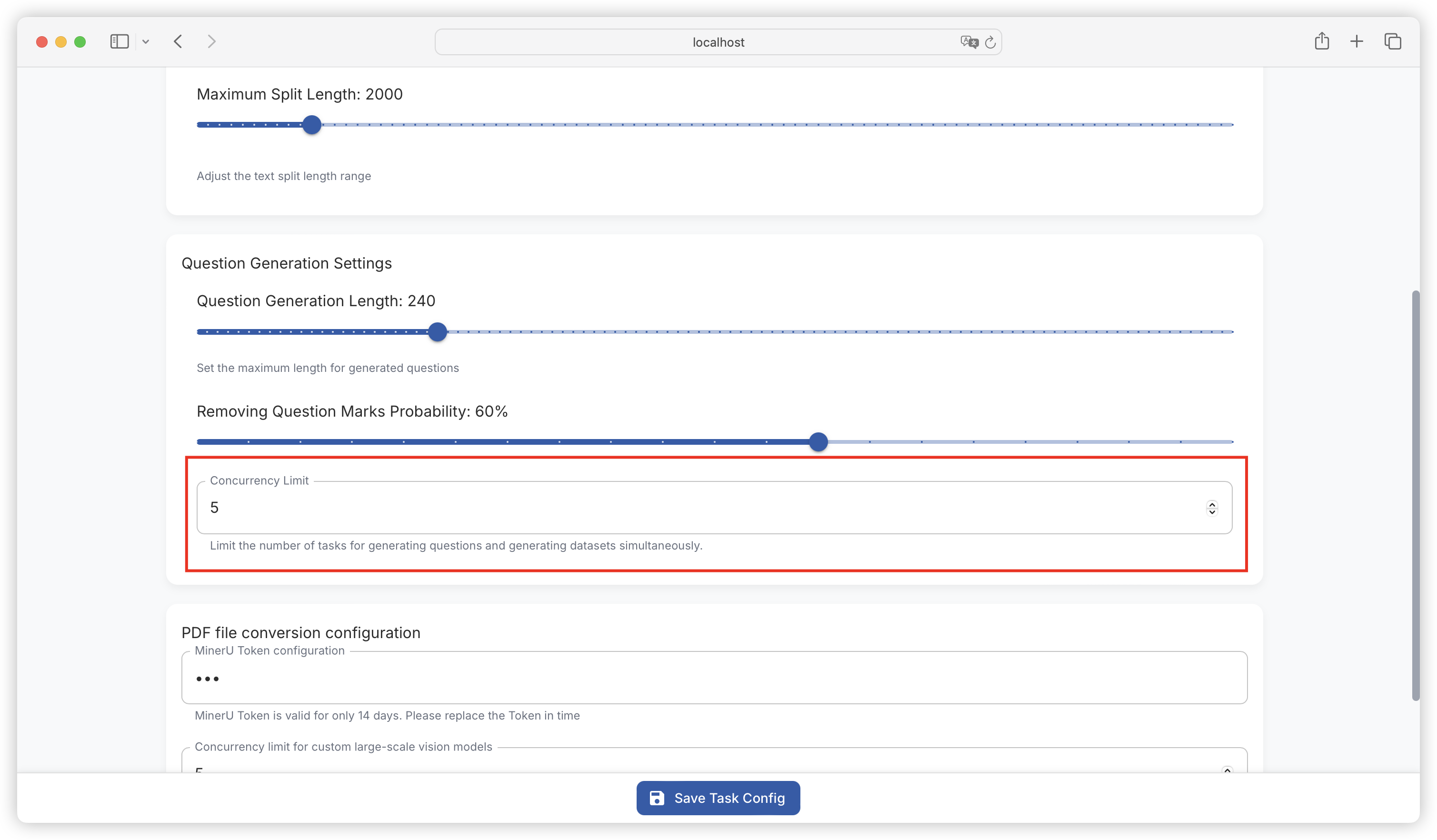
You can control the maximum number of concurrent tasks in batch tasks (default maximum concurrency is 5 tasks).
{% hint style="danger" %}
Note that some model providers will limit the maximum number of concurrent tasks. Setting too large a value may cause batch tasks to fail. It is recommended to flexibly test and adjust.
{% endhint %}
---
# Agent Instructions
This documentation is published with GitBook. GitBook is the documentation platform designed so that both humans and AI agents can read, navigate, and reason over technical content effectively. Learn more at gitbook.com.
## Querying This Documentation
If you need additional information that is not directly available in this page, you can query the documentation dynamically by asking a question.
Perform an HTTP GET request on the current page URL with the `ask` query parameter, and the optional `goal` query parameter:
```
GET https://docs.easy-dataset.com/ed/en/questions/question-generation.md?ask=&goal=
```
`ask` is the immediate question: it should be specific, self-contained, and written in natural language.
`goal` is optional and describes the broader end goal you are ultimately trying to accomplish on behalf of the user. GitBook uses it to tailor the answer towards what is most useful for that goal.
The response will contain a direct answer to the question and relevant excerpts and sources from the documentation.
Use this mechanism when the answer is not explicitly present in the current page, you need clarification or additional context, or you want to retrieve related documentation sections.